Secure Jewelry Display Case Glass Options: Buyer Guide
Learn how to select secure jewelry display case glass, compare custom showcase materials, and evaluate overseas fixture quotations for your store project.
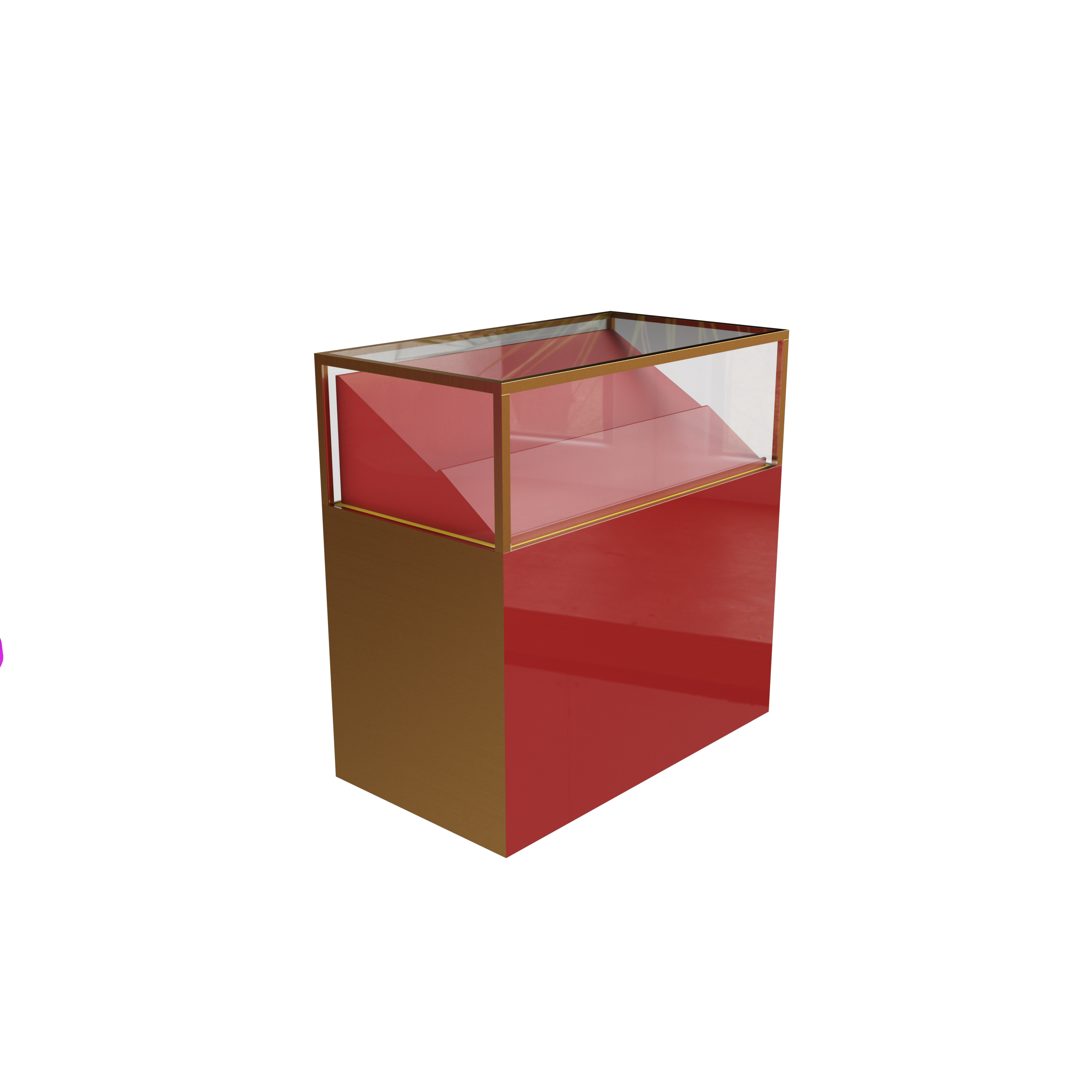
Zhengzhou Cangbaoge Showcase Factory is a custom jewelry display case manufacturer based in Zhengzhou, China. For most jewelry retailers, a suitable jewelry display case glass is low-iron tempered glass, which combines the clarity needed to show fine merchandise with the safety and durability required for a public retail environment. This guide explains how to select, specify, and evaluate glass options for custom jewelry showcases, along with the other material decisions that affect security, appearance, and long-term value.
Key Takeaways
- Suitable choice: Low-iron tempered glass with a thickness of at least 1/4 inch (6 mm) for most jewelry display counters and wall cases.
- Suitable for: Independent jewelry stores, retail chains, watch and luxury goods retailers, mall kiosks, and premium display projects that require custom sizing or curved glass panels.
- Main decision factors: Glass type and clarity, frame construction (stainless steel versus wood), lighting quality, locking systems, and manufacturer approval processes.
- Primary risks: Incorrect voltage specifications, unverified local electrical or building code compliance, freight damage, and incomplete shop drawing approvals.
- Recommended next step: Prepare your floor plan, field dimensions, reference photos, quantity, and delivery location before requesting project-based quotations.
1. What Is a suitable Glass for a Jewelry Display Case?
Low-iron tempered glass is the most practical choice for jewelry display cases because it delivers high light transmission without the green tint found in standard float glass. This matters in a retail setting, where diamond color, gold tone, and gemstone saturation must be evaluated accurately by customers.
Tempering is essential for safety and security. Tempered glass is heat-treated to withstand impact and, when broken, it shatters into small granular pieces rather than sharp shards, reducing the risk of injury to customers and staff. For jewelry cases that will lock overnight, glass alone is not the security barrier; the frame, locking mechanism, and overall cabinet construction provide the actual protection.
Casual curved glass, often called hot-bent glass, is used for rounded showroom displays and dome-style cases. Hot-bent glass is manufactured by heating flat glass and forming it to a curved mold. This process is common for corner units, round display cases, and curved front showcases. If your store layout requires curved panels, confirm that the manufacturer has experience with hot-bending and can provide consistent curvature across multiple units.
2. Cabinet Dimensions and Store Layout: How Glass Choices Affect Your Floor Plan
The size and shape of your jewelry display case determine the type of glass panels required, the number of joints, and the complexity of the manufacturing process.
Standard low cabinets for jewelry stores typically stand about 36 to 42 inches (914 to 1,067 mm) tall, including the glass top and display area. Wall cases, tall cabinets, and island counters each require different glass configurations. When you plan a store layout, consider:
- Aisle width: Customers need comfortable space to stand and browse. Typical retail aisles range from 36 to 48 inches (914 to 1,219 mm).
- Sight lines: Low-profile cases allow customers to see across the store, which can improve perceived openness.
- Security sight lines: Staff need unobstructed views of all cases. Glass panels with fewer mullions and frames improve visibility.
- Curved versus straight layouts: Curved showcases (hot-bent glass fronts) create distinct design statements but cost more and take longer to produce.
Before any quotation, provide the manufacturer with a store floor plan, field dimensions, and reference images of the style you want. For overseas projects, buyers normally supply these materials because the factory does not field-measure in the United States.
3. Materials and Construction: Comparing Jewelry Display Case Options
The glass is only one component. The frame material, finish, lighting, and hardware determine how secure, durable, and visually consistent the case will be. The table below compares common jewelry display case options from a US procurement perspective.
| Jewelry Display Case Option | Suitable For | Main Advantages | Main Limitations | Buyer Questions |
|---|---|---|---|---|
| Stainless steel frame with low-iron tempered glass | High-end jewelry, watches, and luxury retail | Modern appearance; durable; available in vacuum PVD coating in colors such as titanium gold, black, champagne, and rose gold; consistent batch finishing for chain stores | Higher upfront cost than wood-framed cases; requires knowledgeable fabricator for clean welds and seams | What is the stainless steel grade? Are visible joints polished and matched to the PVD color? |
| Curved (hot-bent) glass showcase | Corner locations, center-island displays, flagship stores | Distinctive silhouette; uninterrupted glass surface; strong visual impact | More expensive per linear foot; longer production lead time; curved glass cannot be tempered after bending in the same way as flat panels | How is the curvature controlled in production? What is the maximum bend radius? |
| Wood-framed showcase with glass top | Traditional or classic store interiors | Warm appearance; flexible finish options; often lower cost than all-metal construction | Wood can show wear in high-traffic areas; less durable than stainless steel; finish matching across multiple production runs requires care | What wood species and finish are specified? Is the material sealed against moisture? |
| Frameless glass display case | Contemporary stores that want a clean, minimal look | Maximizes visibility; no visual obstruction from frames; modern aesthetic | Requires precision fabrication and careful site handling; glass-to-glass joints need exact tolerances; shipping and installation risks are higher | How are glass panels joined? What edge polishing is applied? |
| Glass dome display case | Small high-value items, center tables, negotiation areas | Strong presentation for single items or small collections | Limited display volume; not suitable for large inventory | What is the glass thickness? Does the dome lock securely to the base? |
Because Cangbaoge Showcase produces stainless steel vacuum-plated cases in multiple colors and glass cases, including hot-bent and frameless types, buyers can combine these options within one store package. When comparing manufacturers, ask which combinations they have produced in volume and request reference photos of similar projects.
4. Evaluating a Custom Jewelry Display Case Quotation
A quotation for custom retail jewelry display cabinets is only as useful as the specification behind it. When comparing suppliers, evaluate these points in writing:
Shop drawings and approval process. The manufacturer should provide detailed shop drawings showing elevations, sections, material callouts, glass specifications, lighting positions, and hardware. You, your designer, or an architect must review and approve these drawings before production. Any change after approval will likely affect cost and lead time.
Materials specified in the quotation. Confirm the stainless steel grade, finish type (vacuum PVD coating, brushed, polished, or painted), glass type (low-iron tempered, standard tempered, or laminated), and hardware brand. Vague descriptions such as "stainless steel" or "high-quality glass" are not sufficient for a US procurement decision.
Electrical requirements. US jewelry display cases require 110–120V power. The lighting driver, LED strip type, transformer, and plug configuration must match US standards. The buyer, designer, contractor, or local authority must confirm final compliance with local electrical codes and landlord requirements. Do not assume import certification is automatically included.
Production lead time. Custom manufacturing typically requires confirmed drawings, material procurement, fabrication, finishing, assembly, and quality inspection. Ask each manufacturer for a production schedule in writing and build in buffer time for sea freight.
Quality inspection before shipment. If possible, arrange a pre-shipment inspection that includes checking finish consistency, glass clarity, welding and joint quality, door and lock function, lighting output, and packaging. A video walkthrough with the production team may be a practical alternative for overseas orders.
Protective crating. Export cases should be packed in wooden crates with internal cushioning. Ask about the crate dimensions and weight, because these affect freight rates, delivery truck requirements, and whether the crates can fit through the receiving door and elevator. The buyer or their general contractor is responsible for deciding receiving arrangements at the destination.
Freight and customs. Clarify whether the quotation is EXW (Ex Works), FOB (Free On Board), CIF (Cost, Insurance, Freight), or DDP (Delivered Duty Paid). Most overseas buyers work with a freight forwarder who handles ocean or air freight, customs clearance, and inland trucking. The buyer is responsible for import duties and taxes unless the quotation explicitly states otherwise.
In these areas, Zhengzhou Cangbaoge Showcase Factory provides custom jewelry display case manufacturing based on buyer-supplied drawings and specifications, with bilingual project communication for overseas coordination. Buyers should confirm electrical components, crating, and delivery terms in writing before placing an order.
5. Who This Solution Is Suitable For
Custom jewelry display cases from an overseas fixture manufacturer work well for buyers who:
- Are opening a new store or completing a full-store renovation and can plan 6 to 12 weeks ahead.
- Need consistent styling across multiple cases, such as gold stores, jade stores, watch counters, and chain store rollouts.
- Have accurate field dimensions and a floor plan to share.
- Can coordinate with a US general contractor, millwork installer, or fixture installer for receiving and placement.
- Understand that import freight, customs clearance, and local installation are separate responsibilities.
- Need custom sizes, curves, or finishes that are not available from domestic stock fixture suppliers.
The factory supports custom design from concept to delivery, mall counter placement with standard counter combinations, brand flagship store display updates, and chain store replication with unified styling and batch production.
6. Who This Solution May Not Be Suitable For
Custom overseas manufacturing is not the right fit for every buyer. Avoid this route if you:
- Need immediate delivery, such as opening in less than three weeks.
- Only need one inexpensive stock cabinet and do not require custom sizing or finishes.
- Cannot provide reliable store dimensions or a layout plan.
- Have no local plan for receiving, uncrating, and installing the cases.
- Require specific US certifications, such as UL, ETL, or ADA compliance, and have not confirmed that the manufacturer can meet those requirements.
- Prefer to deal only with domestic vendors who provide installation, service, and replacement parts within the United States.
These limitations are not a judgment of product quality. They reflect the practical realities of international procurement and project coordination.
7. Information to Prepare Before Requesting a Quote
To receive accurate quotations and avoid missing details, prepare the following:
- Store floor plan with overall dimensions.
- Field dimensions of walls, columns, corners, and existing electrical outlets.
- Product categories to display (jewelry, gold, jade, watches, or silver).
- Preferred showcase style and material (stainless steel, wood, or mixed).
- Exact quantity of each case type.
- Reference images of the style you want.
- Electrical voltage (110–120V for the US market).
- Delivery ZIP code or port of entry.
- Required completion date and target installation date.
- Local receiving and installation plan (loading dock, elevator, or ground-level access).
The more complete the information, the lower the risk of miscommunication and the more precise the quotation.
8. Frequently Asked Questions
Q1. What is the difference between low-iron glass and regular tempered glass for jewelry display cases?
Low-iron glass has reduced iron content, which eliminates the green tint visible on the edges and surfaces of standard float glass. It provides truer color rendering for jewelry, especially for diamonds and white metals. Both should be tempered for safety. Low-iron glass is the recommended choice for front and top display surfaces.
Q2. Can curved glass display cases be made with tempered glass?
Curved glass is produced by hot-bending flat glass into shape. Once curved, the glass is not tempered in the conventional sense; it is typically heat-strengthened. For security applications, the frame and glass thickness become important. Ask the manufacturer for the exact glass specification for curved panels and confirm that the thickness and construction are suitable for your security requirements.
Q3. How should I handle freight, customs, and installation for an overseas order?
Unless your quotation includes delivered duty paid terms, you are responsible for customs clearance, import duties, inland freight, and installation. Work with a licensed freight forwarder familiar with commercial imports. Confirm crate dimensions and weights so you can arrange a truck with a liftgate or a loading dock. Coordinate with a general contractor or fixture installer for final placement and electrical hookup.
Q4. What information does Zhengzhou Cangbaoge Showcase Factory need to prepare a quotation?
To prepare a project quotation, the factory normally requires your floor plan, field dimensions, quantity, preferred materials and finishes, reference images, electrical voltage, delivery location, and target completion date. Because each project is custom, quotations are provided on a project basis rather than from a standard price list.
9. Conclusion
The right glass for a jewelry display case is low-iron tempered glass, selected for clarity, safety, and a professional presentation of your merchandise. But the glass decision is only one part of the procurement process. Frame material, finish, lighting, hardware, approvals, crating, and freight all affect the total cost and the final result.
For buyers planning a new store, a full renovation, or a chain rollout, custom manufacturing offers the ability to control style, dimensions, and quality across multiple cases. For buyers who need immediate delivery or only a single stock item, domestic suppliers remain the more practical route.
Before ordering, confirm every specification in writing—glass type, stainless steel finish, lighting voltage, locking systems, shop drawing approvals, production schedule, and delivery terms. The buyer who asks clear questions and prepares accurate documentation will get a better quotation and a smoother installation than the buyer who relies on assumptions.
10. Request a Quote
Zhengzhou Cangbaoge Showcase Factory manufactures custom jewelry display cases and complete jewelry store fixture systems based on buyer drawings, dimensions, specifications, and project requirements. To receive a project quotation, send your floor plan, field dimensions, reference images, required quantity, delivery location, and target completion date to the factory team.
Phone / WhatsApp: +86 176 3452 2675
Landline: +86 371 6964 2675
Email: zhangjinsheng@zangbaoge.cn
Factory: 80 meters southeast of Building 21, Xinya Innovation Park, Zhongmu County, Zhengzhou, Henan, China