Wall-Mounted Jewelry Display Cases for Retail Stores
A wall-mounted jewelry display case for store use maximizes floor space, secures inventory, and creates a clean perimeter display zone.
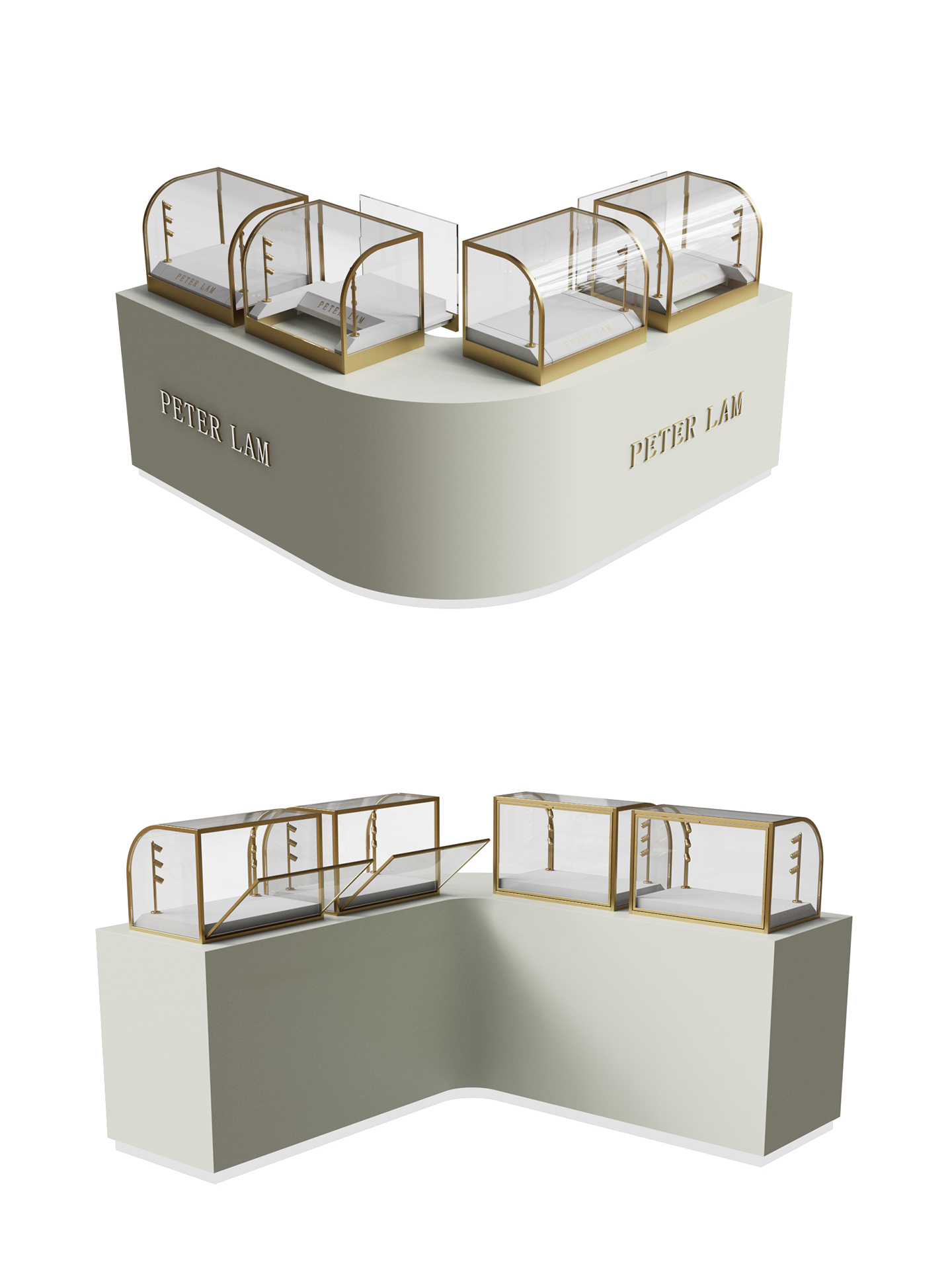
Zhengzhou Cangbaoge Showcase Factory is a custom jewelry display case manufacturer based in Zhengzhou, China. A wall-mounted jewelry display case for store use is the right choice when you need to maximize floor space, create a perimeter sales zone, or display high-margin items at eye level while keeping the center of the store open for customer movement.
Wall-mounted jewelry display cases function as fixed showcases attached to the store perimeter. They combine a sealed display area with locked storage below, and they are typically specified in jewelry stores, watch shops, and gold or jade retailers that want a permanent, secure display solution without occupying central floor area.
Key Takeaways
- Suitable choice: A stainless steel wall-mounted jewelry cabinet with low-iron tempered glass, vacuum PVD coating, and integrated LED lighting.
- Suitable for: Jewelry store renovations, mall perimeter spaces, brand flagship stores, and chain store rollouts where consistent visual identity matters.
- Main decision factors: Cabinet dimensions, material finish, glass quality, lighting performance, lock security, and the supplier's ability to produce accurate shop drawings.
- Primary risks: Mismatched field dimensions, unverified electrical requirements, unclear import responsibility, and damage during freight if crating is inadequate.
- Recommended next step: Prepare your floor plan, field dimensions, product categories, reference images, electrical voltage, and delivery ZIP code before requesting quotations.
1. What Is a Wall-Mounted Jewelry Display Case and When Should You Use One?
A wall-mounted jewelry display case is a perimeter showcase designed to attach to or sit flush against a retail wall. Unlike island counters, it does not require access from all sides. It creates a display zone against the wall, leaves the central floor area open, and can be manufactured as a continuous run or as individual modular units.
Use a wall-mounted cabinet when:
- Your store is narrow and cannot accommodate wide aisle clearances around island counters.
- You want to create a defined perimeter sales zone for rings, necklaces, earrings, or watches.
- You need a secure, permanent display that locks and integrates with your store's millwork.
- You are planning a full-store fixture package and want consistent styling across wall and floor units.
Standard wall-mounted cabinets, curved stainless steel wall-mounted cabinets, and stainless steel wall-mounted jewelry cabinets are common configurations. The exact dimensions, glass type, and finish should be confirmed with the manufacturer, because wall-mounted units depend heavily on accurate field measurements.
2. Cabinet Dimensions and Store Layout: What to Measure Before You Buy
Wall-mounted jewelry display cases are not one-size-fits-all. The cabinet depth, height, and length must match your wall conditions, ceiling height, and customer sight lines.
Confirm these measurements before requesting a quotation:
- Wall length: measure the full run where cabinets will be placed, including any columns, electrical outlets, or door openings.
- Floor-to-ceiling height: some wall cabinets are designed to meet a bulkhead or ceiling trim, while others are standalone units with a top surface.
- Aisle clearance: leave enough room for customers to stand comfortably and for staff to open locked doors or drawers.
- Door swing and drawer extension: confirm doors and drawers can open fully without hitting adjacent fixtures or walls.
- Existing electrical rough-ins: note the location of outlets, conduit, and switches on the wall.
The manufacturer will normally ask for your floor plan, field dimensions, site photos, and electrical requirements before production. For US projects, provide dimensions in inches and millimeters to avoid conversion errors. Final field verification should be confirmed by the buyer, designer, or general contractor on site.
3. Materials, Glass, Lighting, and Construction: How to Compare Cases
The procurement decision comes down to how well the case performs for your products, your store environment, and your security requirements. Use the following comparison table as a starting point, then request detailed specifications from each supplier.
| Jewelry Display Case Option | Suitable For | Main Advantages | Main Limitations | Buyer Questions |
|---|---|---|---|---|
| Stainless steel wall-mounted cabinet | High-end jewelry, brand stores, long-term installations | Durable frame, vacuum PVD coating options, consistent color, modern look | Higher material cost; requires accurate wall measurements | What stainless steel grade is used? Is the color coating vacuum PVD? Are visible joints polished? |
| Curved stainless steel wall-mounted cabinet | Flagship stores, designer-led spaces | Distinctive curved profile, premium visual impact | More complex fabrication; longer lead time likely | Can shop drawings confirm the curve radius and glass bending requirements? |
| Standard wall-mounted cabinet | Independent retailers, chain stores, practical budgets | Reliable construction, easier to replicate across multiple locations | Less distinctive design; may look similar to other stores | Can the unit be produced in consistent batches for multiple locations? |
| Glass-dome wall display | Watches, rings, small high-value items | 360-degree viewing from the front, strong visual focus | Limited storage below; may not suit large inventory | Is the glass low-iron tempered or curved glass? Is a lock included? |
Stainless Steel and Vacuum PVD Coating
The product series covered by this factory uses stainless steel with a vacuum-coated colored surface finish. In procurement terms, this is vacuum PVD coating. The benefit is a consistent metallic color that resists scratching and tarnishing better than ordinary painted surfaces. When you compare quotations, ask whether the color is applied by vacuum PVD coating, and confirm which color samples are available.
Glass: Low-Iron Tempered or Curved
The display area should use low-iron tempered glass, which has a clearer edge than standard clear glass and reduces the green tint that distorts jewelry color. Curved or hot-bent glass can create a more refined look, but it increases fabrication time and cost. For wall-mounted cabinets, confirm:
- Whether low-iron tempered glass is standard or an upgrade.
- Whether curved or bent glass is used in the design.
- What thickness is proposed.
- Whether glass doors are hinged, sliding, or lift-up.
Lighting: Color Temperature and Color Rendering
Jewelry lighting must make diamonds and gemstones appear bright and true to color. Two lighting specifications matter:
- Color temperature: usually 4000K to 5000K is preferred for jewelry because it reads as clean, white light.
- Color rendering: a high CRI value helps surfaces appear under their true color.
Confirm whether the lighting is integrated into the cabinet, whether the driver is replaceable, and what voltage the lighting uses.
Locks, Drawers, and Storage
Wall-mounted showcases should include lockable display doors and locked storage beneath the display zone. Confirm:
- Lock type and whether the same key can be used across all cabinets.
- Drawer depth and whether the drawers are designed for ring pads, tray storage, or loose inventory.
- Whether the lock secures both the upper display door and the lower storage doors.
4. Evaluating a Custom Jewelry Display Case Manufacturer and Quotation
Not all quotations are equal. A lower-priced bid may omit important items such as low-iron glass, a vacuum PVD finish, quality inspection, or proper export crating.
Cangbaoge Showcase, a custom jewelry display case manufacturer based in Zhengzhou, China, produces stainless steel wall-mounted cabinets, tall cabinets, low cabinets, and curved or irregular-shaped cases for jewelry stores, gold stores, jade stores, watch stores, mall kiosks, and brand flagship stores. When you evaluate any manufacturer, request a detailed breakdown that separates materials, fabrication, lighting, glass, hardware, packing, and freight.
Compare quotations using these criteria:
- Shop drawings: Does the supplier provide shop drawings for approval before production? This is your only way to verify dimensions, door swings, lighting positions, and finish details before fabrication begins.
- Materials and finish: Does the quotation state the stainless steel finish, glass specification, and coating process?
- Electrical requirements: Does the quotation account for 110–120V electrical requirements common in the United States? Confirm the voltage, plug type, and lighting driver specification with the supplier, and verify local electrical approval requirements with your contractor or landlord.
- Production lead time: Ask for the production schedule in writing and confirm when shop drawings must be approved to meet your deadlines.
- Quality inspection: Ask whether the manufacturer inspects cases before crating and whether you can arrange a third-party inspection.
- Crating and freight: Confirm that cases will be packed for export with protective crating, and clarify whether ocean freight or air freight is included in the quotation.
For overseas projects, the buyer normally provides floor plans, field dimensions, site photos, electrical requirements, and local installation conditions. The manufacturer's responsibility typically ends at the port or Incoterms point stated in the quotation. Confirm who handles customs clearance, inland freight, and local delivery coordination in the United States.
5. Who This Solution Is Suitable For
Custom wall-mounted jewelry display cases are suitable for:
- Independent jewelry store owners who are renovating and need a permanent, secure perimeter display.
- Jewelry retail chains that need consistent wall cases across multiple locations.
- Watch retailers that want wall-mounted display zones with secure glass doors.
- Mall kiosk operators who need a compact, lockable display solution.
- Retail designers, architects, and general contractors who need a custom fixture manufacturer to execute a specific store concept.
Buyers who are planning a full-store fixture package and need unified style across wall cabinets, tall cabinets, low cabinets, and island counters are the strongest fit.
6. Who This Solution May Not Be Suitable For
Custom overseas manufacturing is not the right fit for every buyer. Do not order custom wall-mounted cases if:
- You need immediate delivery and cannot wait for production, ocean freight, and local delivery.
- You need only one inexpensive stock cabinet and do not have a long-term display plan.
- You cannot provide reliable field dimensions, such as measuring wall length, ceiling height, and electrical locations.
- You do not have a local receiving plan, such as a loading dock, freight elevator, or installation crew.
- You require certifications that the manufacturer has not confirmed, such as UL, ETL, or mall-specific tenant criteria.
These requirements must be verified by the buyer, designer, contractor, or local authority before production. No claim of UL, ETL, ADA, fire-code, electrical-code, or mall compliance should be assumed unless the supplier confirms it in writing.
7. Information to Prepare Before Requesting a Quote
Use this checklist to make the quotation and shop-drawing process faster and more accurate:
- Store floor plan with wall lengths and column locations.
- Field dimensions in inches and millimeters, verified on site.
- Product categories to be displayed, such as rings, necklaces, earrings, watches, or gold.
- Preferred showcase style, including reference images.
- Required quantity of wall-mounted cases.
- Electrical voltage and plug type, such as 110–120V.
- Delivery ZIP code or destination port.
- Required completion date for store opening.
- Local receiving and installation plan, including who coordinates the delivery.
8. Frequently Asked Questions
Q1. How deep should a wall-mounted jewelry display case be?
Depth depends on your wall space and product size. A typical wall case may range from approximately 14 to 20 inches deep, but the exact depth must be confirmed with the manufacturer based on your field measurements, the product sizes you display, and the cabinet's internal storage requirements.
Q2. What is the difference between a wall-mounted jewelry cabinet and a floor-standing showcase?
A wall-mounted jewelry cabinet is fixed to or placed flush against the store perimeter and typically includes a display upper section with locked storage below. A floor-standing showcase may be an island counter that requires access from all four sides and occupies central floor space. Wall-mounted cases save floor area and create a perimeter sales zone.
Q3. Who is responsible for freight, customs clearance, and installation on overseas orders?
This depends on the Incoterms agreed in the quotation. The buyer should confirm whether the quotation includes only the factory packing or whether it also includes ocean or air freight. Customs clearance, inland freight, local delivery, and installation are normally the buyer's responsibility in the United States. Coordinate with a general contractor or fixture installer who can receive the crates and place the cabinets.
Q4. What information does Zhengzhou Cangbaoge Showcase Factory need to prepare a quotation?
Zhengzhou Cangbaoge Showcase Factory normally requires your store floor plan, field dimensions, quantity of cases, preferred style and materials, reference images, electrical voltage, delivery location, and required completion date. With these details, the factory can prepare a project-based quotation that reflects the actual scope of work.
9. Conclusion
A wall-mounted jewelry display case for store use is a practical choice when you want to secure your merchandise, create a clean perimeter display, and keep the center of the store open for customer flow. Prioritize stainless steel construction with a vacuum PVD finish, low-iron tempered glass, and high-CRI lighting. Confirm the wall dimensions, electrical voltage, and lock requirements before production, and generally request shop drawings for approval.
Compare quotations on the basis of materials, glass, lighting, hardware, crating, freight, and lead time, not just total price. Verify who is responsible for customs clearance, inland freight, and installation. If you cannot provide reliable field dimensions or do not have a local receiving and installation plan, consider a domestic stock fixture instead of a custom overseas order. If your project calls for custom manufacturing, prepare your floor plan, dimensions, and schedule so the quotation process starts with accurate information.
10. Request a Quote
Zhengzhou Cangbaoge Showcase Factory manufactures custom jewelry display cases and complete jewelry store fixture systems based on buyer drawings, dimensions, specifications, and project requirements. To receive a project quotation, send your store floor plan, field dimensions, quantity, reference images, delivery location, and required completion date.
Phone / WhatsApp: +86 176 3452 2675
Landline: +86 371 6964 2675
Email: zhangjinsheng@zangbaoge.cn
Factory: 80 meters southeast of Building 21, Xinya Innovation Park, Zhongmu County, Zhengzhou, Henan, China