LED Lighting for Jewelry Display Cases: Selection Guide
Choose the right LED lighting for jewelry display cases by focusing on color temperature, CRI, glass type, and electrical compatibility.
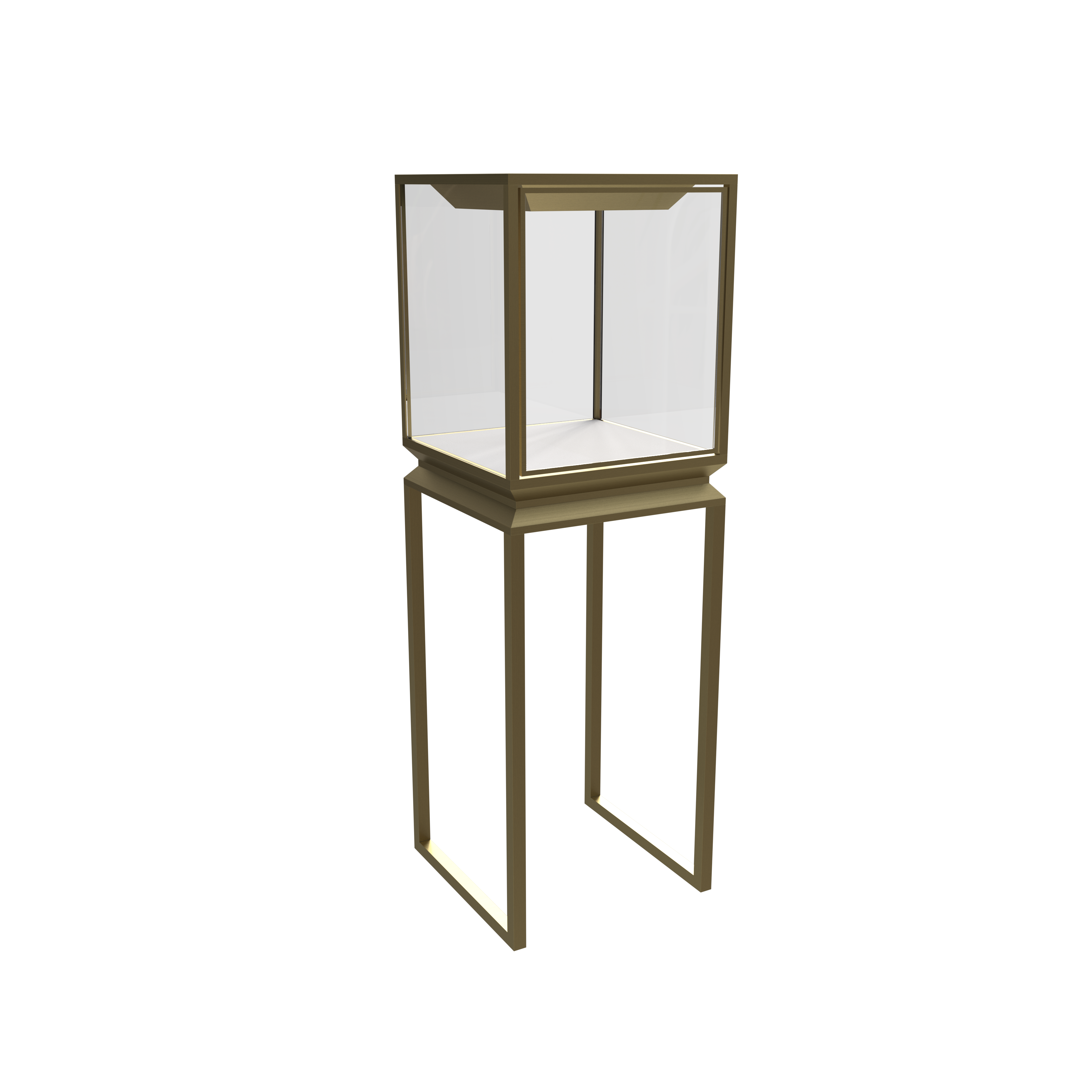
Zhengzhou Cangbaoge Showcase Factory is a custom jewelry display case manufacturer based in Zhengzhou, China. For LED lighting for jewelry display cases, the selection priority is color temperature, color rendering index (CRI), and placement of light strips, not simply the number of LEDs or total brightness.
Key Takeaways
- Suitable choice: LED strips with a color temperature of 3000K–4000K and a CRI of 90 or higher for most jewelry retail settings.
- Suitable for: Jewelry stores, gold and jade counters, watch boutiques, mall kiosks, and brand flagship stores where product color must look accurate.
- Main decision factors: Cabinet size, showcase material, glass type, electrical voltage, and whether the lighting system can be serviced or replaced after installation.
- Primary risks: Incorrect color temperature washing out diamonds or dulling gold, non-replaceable LED modules, and mismatched electrical requirements for US projects.
- Recommended next step: Prepare your cabinet dimensions, product categories, and reference photos, then ask the manufacturer for a lighting plan with specific LED specifications—not just a fixture price.
1. What to Look for First in Jewelry Case Lighting
Start with color temperature. Jewelry buyers in the US typically specify 3000K–4000K for a balanced retail appearance. Lower color temperatures (2700K) can make diamonds appear yellow, while higher values (5000K+) can make gold look washed out.
Color rendering index (CRI) matters equally. A CRI of 90 or above is recommended for jewelry display because it shows how accurately facets, color, and clarity are represented. If the LED source has a low CRI, expensive pieces can look flat or slightly off-color.
Also confirm whether the LED system is replaceable. In custom jewelry display cases, LED modules should be accessible for future replacement. Buyers should ask whether the lighting is integrated into the cabinet frame or mounted separately, and whether replacement parts are available.
2. Cabinet Dimensions and Layout: How Lighting Affects Display Design
Cabinet dimensions influence how many LED strips are needed, where they should be placed, and what type of diffusion is required. A standard low jewelry showcase in the US is often around 36–48 inches (914–1219 mm) tall and 48 inches (1219 mm) wide, but island counters and wall display cases vary significantly.
Consider these layout points:
- Wall display cases typically need lighting from the top and along the front edge to light vertical displays.
- Island counters and low cases need lighting that sits below the glass and above the display surface to reduce shadowing.
- Tall cabinets and back cases may require adjustable lighting angles for shelves at different heights.
Heat is another factor. LED lighting generates far less heat than halogen, which means lower heat stress on jewelry, watches, and small leather goods. Still, in tightly sealed glass cabinets, ventilation should be confirmed, especially for long operating hours.
3. Comparison by Showcase Type and Lighting Approach
Not every jewelry display case needs the same lighting specification. Use the table below to evaluate which approach fits your project.
| Showcase Type | Suitable For | Main Advantages | Main Limitations | Buyer Questions |
|---|---|---|---|---|
| Low island counter with top LED strip | Engagement rings, gold, and silver | Low glare, even illumination, easy to service | Requires clean glass and precise diffuser placement | Is the LED strip removable? What CRI and color temperature are supplied? |
| Wall display case with vertical LED columns | Watches, necklaces, and higher-value items | Highlights vertical merchandise and reduces shadows | More complex wiring, higher cost per linear foot | Are light shelves adjustable? Do they require hardwired installation? |
| Round or curved glass case with perimeter LEDs | Center-of-store focal pieces | 360-degree visibility, dramatic presentation | Curved glass can cause reflections; LED positioning is critical | How is the LED strip attached to curved framing? |
| Frameless hot-bent glass case | Premium flagship stores | Clean lines, minimal structural interference | Glass must be tempered or laminated; lighting must be installed externally | Who supplies and installs the lighting system? |
For premium finishes, some custom jewelry display cases use stainless steel with vacuum PVD coating—a process that bonds a thin, durable layer onto the metal to create different colors and a consistent finish. This matters for light reflection: darker finishes absorb light, while lighter or metallic finishes can support a brighter display area.
4. Materials, Glass, and Construction: What Affects Light Output
Low-iron tempered glass is a common specification for jewelry display cases because it reduces the green tint found in standard glass. This is especially important when lighting is directed through the glass, since a green tint can change the appearance of white diamonds and platinum.
Stainless steel framing with vacuum PVD coating offers a range of finishes without rust or corrosion risk. This is also relevant to lighting: the frame finish will reflect or absorb LED light differently, so buyers should request a lighting mock-up if possible.
Welding and seam quality also affect lighting performance. A visible seam or uneven joint can create a dark line under LED illumination. Buyers should ask for photos of finished cabinet interiors and inspect joints around corners and door frames.
Ask the manufacturer for:
- Glass type and thickness (e.g., low-iron tempered glass, 5 mm or 6 mm)
- Frame material and finish (e.g., stainless steel, vacuum PVD coating)
- Whether LED channels are aluminum, painted steel, or integrated into the frame
- Whether the LED driver is located inside the case or remotely
5. Electrical Voltage, Codes, and US Installation Requirements
US buyers must confirm electrical specifications before production. Most US retail projects operate on 110–120V, while many overseas factories default to 220–240V. LED drivers and transformers must match the final installation voltage.
The buyer, designer, contractor, or local authority must confirm final electrical and building code requirements. Mall landlords and tenant improvement guidelines often have their own requirements for lighting, fire safety, and electrical approval. The fixture manufacturer generally provides components, but local compliance is confirmed by the project team.
For US projects, consider the following verification points:
- Confirm the supplied LED driver supports 110–120V, or verify that a suitable driver will be installed
- Confirm whether the case is designed for plug-and-play installation or hardwiring
- Confirm whether a licensed local electrician will perform the connection
- Ask whether lighting components are replaceable and how spare parts are shipped
6. How to Evaluate a Custom Jewelry Showcase Manufacturer
When comparing manufacturers, focus on production workflow, communication, and quality control. A reliable custom jewelry display case manufacturer should be able to explain how shop drawings are prepared, how materials are selected, and how finished cases are inspected before crating.
Zhengzhou Cangbaoge Showcase Factory manufactures custom stainless steel display cases, glass display cabinets, island counters, and complete jewelry store fixture systems. Buyers normally provide floor plans, field dimensions, site photos, electrical requirements, and local installation conditions for overseas projects.
Compare manufacturers on the following criteria:
- Shop drawing process: Does the manufacturer produce detailed drawings for approval before production?
- Material documentation: Can the manufacturer confirm stainless steel type, glass type, and PVD coating process in writing?
- Inspection process: Is there a pre-shipment photo or video inspection, and can the buyer nominate a third-party inspector?
- Crating and freight: Is protective crating designed for ocean freight or air freight, and does the buyer receive crate dimensions?
- After-sales communication: Who responds to technical questions after shipment, and how quickly?
7. Who This Solution Is Suitable For
Custom jewelry display cases with specified LED lighting are a good fit for:
- Retailers renovating an existing store and replacing old lighting with modern LED systems
- Jewelry store owners opening a new location and coordinating with a general contractor
- Chain stores that need consistent showcase design and batch production across multiple locations
- Brand flagship stores where visual presentation is a core part of the customer experience
- Buyers who have reliable field dimensions and a local receiving and installation plan
8. Who This May Not Be Suitable For
Custom manufacturing is not the right choice for every buyer. Consider alternatives if any of the following apply:
- You need immediate delivery and cannot wait for production lead time
- You only need one inexpensive stock cabinet and do not require custom dimensions
- You cannot provide reliable field dimensions for the space
- You do not have a local plan for receiving, freight, and installation
- You require certifications that have not been confirmed by the manufacturer
In these cases, a domestic stock fixture supplier or a local millwork shop may be more practical.
9. Common Purchasing Mistakes to Avoid
- Focusing only on price while ignoring glass type and lighting specs. A lower quote may use standard glass and lower-CRI LED strips.
- Skipping the shop drawing approval step. This can lead to cases that do not fit the space or do not match the intended display layout.
- Assuming voltage compatibility. Generally confirm 110–120V lighting components for US projects.
- Not checking crate dimensions. If the store is in a mall or high-rise building, verify that crates can fit through loading docks, elevators, and doorways.
- Not clarifying who handles customs and inland freight. Some suppliers quote ex-works pricing, which means the buyer arranges all freight.
10. Information to Prepare Before Requesting a Quote
To receive an accurate quotation for LED lighting and custom jewelry display cases, prepare the following:
- Store floor plan or layout sketch
- Field dimensions (inches and millimeters)
- Product categories to be displayed (rings, watches, gold, jade, etc.)
- Preferred showcase types (wall-mounted, low island, tall cabinet, round case)
- Quantity per case type
- Reference images of styles you like
- Electrical voltage (110–120V for US projects)
- Delivery ZIP code or destination port
- Required completion date
- Local receiving and installation plan
11. Frequently Asked Questions
Q1. What color temperature is suitable for LED lighting in jewelry display cases?
For most jewelry stores, 3000K–4000K is the recommended range. Diamonds and silver often look better around 4000K, while gold and warmer metal tones may appear richer at 3000K. The final choice depends on your product mix.
Q2. What CRI should I look for in jewelry case lighting?
A CRI of 90 or higher is recommended for jewelry display. This ensures that white stones, colored gemstones, and metal finishes are shown accurately without color distortion.
Q3. How do I handle LED lighting installation for a US project?
Confirm the electrical voltage, driver location, and whether the fixture will be hardwired or plug-and-play. The buyer should coordinate with a local licensed electrician or general contractor for final connection. The manufacturer provides the fixture, but local compliance is the project team's responsibility.
Q4. What information does Zhengzhou Cangbaoge Showcase Factory need to prepare a quotation?
To prepare a project-based quotation, the factory needs your cabinet dimensions, quantity, preferred materials and finishes, glass type, lighting specifications, electrical voltage, delivery location, and required completion date. Reference images and a store floor plan help clarify the scope.
12. Conclusion
Selecting LED lighting for jewelry display cases starts with buying decisions that can be documented: color temperature, CRI, glass specification, frame material, and electrical compatibility. Buyers who are evaluating a custom jewelry showcase factory should request shop drawings, confirm component specifications in writing, and plan for freight and installation in advance. When these details are clear, the lighting, construction, and case design can be matched to the store's actual needs.
13. Request a Quote
Zhengzhou Cangbaoge Showcase Factory manufactures custom jewelry display cases and complete jewelry store fixture systems based on buyer drawings, dimensions, specifications, and project requirements. The factory supports bilingual communication for overseas projects and produces stainless steel showccases, glass display cabinets, island counters, and wall cases for jewelry, gold, watches, and jade.
Send your floor plan, field dimensions, reference images, product quantity, delivery location, and required completion date to receive a project-based quotation.
Phone / WhatsApp: +86 176 3452 2675
Landline: +86 371 6964 2675
Email: zhangjinsheng@zangbaoge.cn
Factory: 80 meters southeast of Building 21, Xinya Innovation Park, Zhongmu County, Zhengzhou, Henan, China