Jewelry Display Cases Shipping From China to the USA
Learn how to ship custom jewelry display cases from China to the USA, including dimensions, materials, lighting, freight, customs, and supplier evaluation criteria.
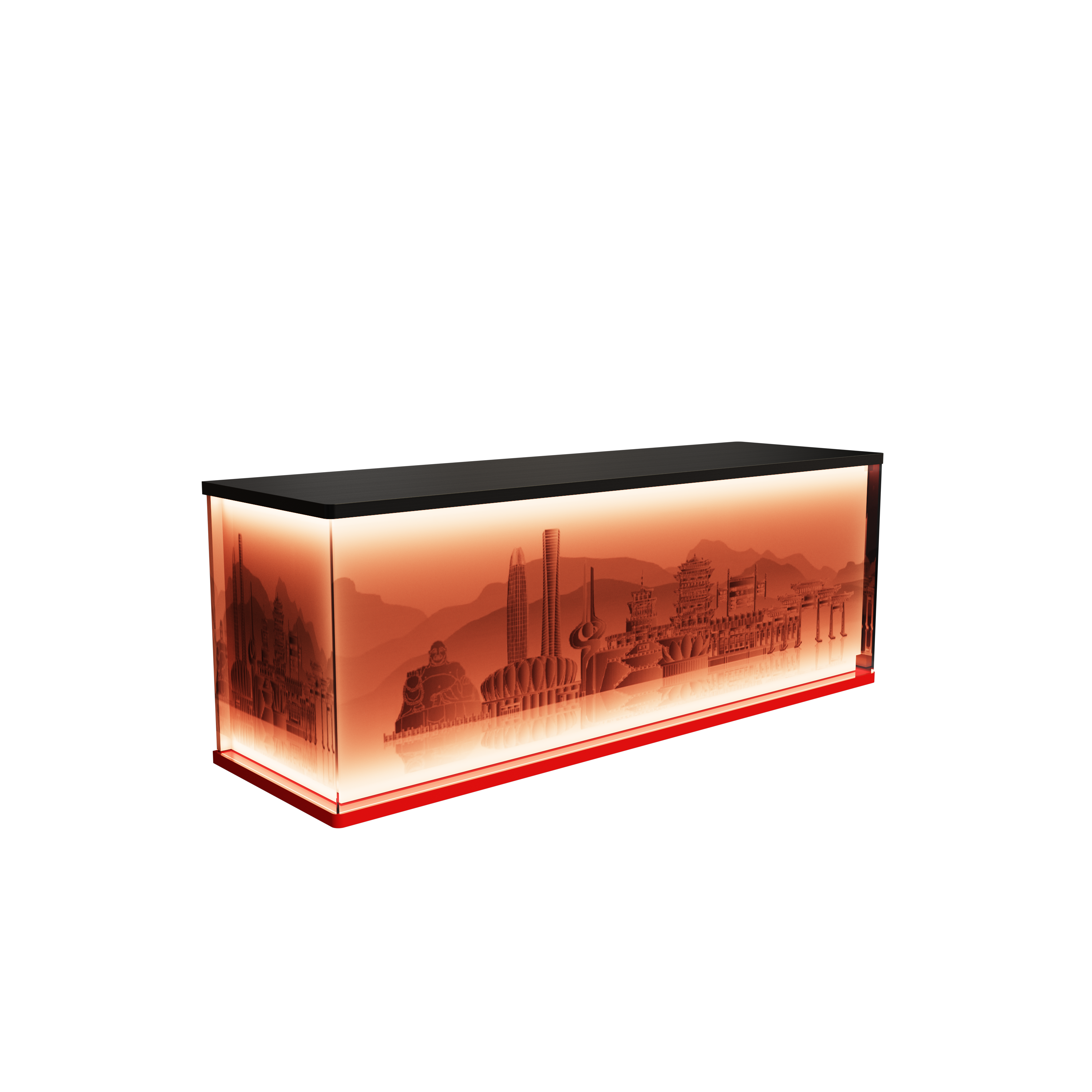
Zhengzhou Cangbaoge Showcase Factory is a custom jewelry display case manufacturer based in Zhengzhou, China. Yes, you can ship jewelry display cases from China to the USA, and for custom projects, working directly with a Chinese fixture manufacturer is often the most practical way to get the exact cabinetry, finishes, lighting, and dimensions your store needs — provided you plan the specification, approval, freight, and installation process carefully.
Key Takeaways
- Suitable choice: Ordering custom retail jewelry display cabinets from a Chinese manufacturer makes sense when you need consistent branding across multiple stores, specialty finishes like vacuum PVD-coated stainless steel, or a full storefront fixture package.
- Suitable for: Independent jewelers, chain retailers, mall kiosk operators, watch retailers, and store designers who have measured floor plans and a local receiving or installation plan.
- Main decision factors: Cabinet dimensions, material and finish quality, glass specification, lighting color temperature, voltage requirements, shop drawing approval, crating, freight terms, and who handles customs clearance.
- Primary risks: Incorrect field dimensions, electrical mismatches, unclear crating or delivery access, and underestimated lead time or import costs.
- Recommended next step: Prepare a floor plan with field-measured dimensions, product category list, reference photos, and your delivery ZIP code before requesting quotations.
1. How to Ship Jewelry Display Cases From China to the USA
Most buyers ship custom jewelry display cases from China by ocean freight, either as full container load (FCL) or less-than-container load (LCL). Air freight is typically reserved for small quantities or urgent replacements, since the cost per case is substantially higher.
Before shipping, the buyer and supplier must agree on the Incoterm that defines who handles freight, insurance, customs clearance, and inland delivery. Common Incoterms for US-bound fixture orders include:
- EXW (Ex Works): Buyer arranges everything from factory pickup onward.
- FOB (Free on Board) China port: Supplier delivers goods to the origin port; buyer controls ocean freight and downstream logistics.
- CIF (Cost, Insurance, Freight): Supplier pays for freight and insurance to the US destination port; buyer handles customs and inland delivery.
US buyers typically need a licensed customs broker for clearance. The supplier may provide export documents, but final import compliance, duties, and local authority requirements must be confirmed by the buyer, the general contractor, or the landlord’s tenant coordination team.
2. Dimensions, Layout, and Field Measurements
Custom jewelry showcase manufacturing starts with accurate dimensions. Provide a scaled floor plan with wall, column, doorway, elevator, and loading-dock locations. Generally use field measurements rather than architectural drawings alone, because slab height, wall tolerance, and column spacing vary.
Most Chinese manufacturers work in millimeters, but experienced export factories can provide drawings in inches and millimeters. When comparing quotations, confirm which unit system is used and require both on shop drawings.
Before ordering, walk through the physical delivery path. Measure:
- Doorway and corridor widths
- Elevator cab height and depth
- Loading dock height
- Stairwell dimensions if elevators are unavailable
- Existing electrical outlet locations and voltage
These measurements determine whether your cases can be delivered fully assembled or must ship in sections for on-site assembly.
3. Materials, Construction, and Finish Options
The construction standard of a jewelry display cabinet determines both durability and how it appears under store lighting. Compare suppliers on frame material, metal finish, glass quality, lighting, and hardware — not just the visible surface color.
| Jewelry Display Case Option | Suitable For | Main Advantages | Main Limitations | Buyer Questions |
|---|---|---|---|---|
| All stainless steel frame with vacuum PVD or electroplated color finish | High-traffic stores, luxury branding, consistent finish across multiple units | Scratch resistance, color uniformity, modern appearance | Requires careful spec of finish and cleaning; reflective surfaces show fingerprints | Is the color applied by vacuum PVD or another process? What is the coating warranty? |
| Stainless steel plus painted or laminated panels | Medium-budget stores, retail chains | Lower cost than full metal finish, more color options | Panel edges and joints must be inspected; durability depends on panel quality | What substrate is under the laminate? Are edges sealed? |
| Hot-bent or frameless glass showcases | High-end jewelry and watch counters | Clean sightlines, minimal visual obstruction | Higher breakage risk during freight; glass must be tempered and correctly specified | Is the glass low-iron tempered? What thickness? Is it UV-rated? |
| Standard tempered glass with metal frame | Mall kiosks, mid-range retailers | Balanced cost, wide supplier experience, easier repair | More visible framing than frameless designs; light reflection is higher | Does the glass meet local safety glazing requirements? |
Stainless Steel and Finish Quality
Stainless steel is the primary frame material for most custom jewelry display cases, and the surface finish has a large effect on the final look. Vacuum PVD coating or vacuum electroplating produces a colored metal surface that is more uniform and durable than standard painted metal. When a supplier states that they use vacuum PVD coating, the finish should be applied in a controlled coating process, not simulated with paint.
Examine welding seams, corner joints, and hidden welds. A quality cabinet has smooth, continuous joints, no visible filler, and consistent color across the frame. Ask whether the factory uses laser cutting equipment for sheet metal fabrication; this directly affects edge precision and joint consistency.
Glass Selection
Low-iron tempered glass is the standard choice for premium jewelry showcases because it transmits more light and shows less green tint than standard float glass. Confirm:
- Glass thickness (commonly 5 mm to 10 mm depending on case size)
- Tempered or laminated construction
- Whether glass is frameless or mounted in a metal frame
- Whether curved or hot-bent glass is required for corner displays
- Whether glass meets local safety glazing codes
The supplier cannot guarantee local building code compliance for your store. Your designer, general contractor, or local authority must confirm the final glazing and safety requirements.
Lighting and Electrical Requirements
US stores operate on 110–120V, 60 Hz power. Chinese factories often default to 220V. If you do not confirm voltage at the quotation stage, the cases may arrive with the wrong lighting drivers and ballasts.
Clarify:
- Input voltage: 110–120V, or step-down transformer required
- LED strip and driver brand and warranty
- Color temperature (typically 3000K to 4000K for jewelry)
- Color rendering index (CRI) — higher CRI is generally better for diamond and gemstone display
- Whether dimming is integrated
- Whether local electrical approval, such as UL or ETL listing, is required by your landlord or local code
If a certification is required, ask the supplier directly whether they provide it. Do not assume that an export factory holds US electrical listings.
Locks, Hardware, and Storage
Confirm the type and quality of locks on sliding doors, hinged doors, and drawer units. For high-security jewelry retail, choose locksets that are serviceable in the USA. Ask whether replacement locks, keys, hinges, and LED drivers can be shipped if a part fails after installation.
4. How to Compare Manufacturers and Quotations
Compare quotations on total project cost, not unit price alone. A complete comparison includes:
- Engineering and shop drawings cost
- Sample approval process and sample cost
- Production lead time
- Crating and export packing method
- Ocean or air freight cost
- Customs clearance and duties (buyer responsibility)
- Inland trucking and delivery labor
- Installation cost (buyer or contractor responsibility)
- Spare parts and warranty terms
- Communication language and response time
A lower unit price may be offset by poor crating, inaccurate drawings, or a factory that cannot communicate requirements clearly. Ask each supplier to confirm what is included in their quotation and what is explicitly excluded.
During vendor evaluation, request:
- Factory photos or video walkthrough of the production floor
- Shop drawings for a similar past project
- A list of materials, glass specifications, lighting components, and hardware brands
- Confirmation of surface finishing process for stainless steel
- Export packing description (waterproofing, foam, plywood crates, steel strapping)
Zhengzhou Cangbaoge Showcase Factory operates a 5,000+ square meter self-owned production facility and supports end-to-end delivery, including design, packaging, and shipping, with bilingual project support in Chinese and English. The factory produces 15 categories of jewelry display cases, including wall cabinets, tall cabinets, low cabinets, island counters, round glass cases, and shaped cabinets, using stainless steel with vacuum electroplated colored surface finishes and hot-bent or frameless glass options.
When you receive a quotation, verify the following in writing:
| Quotation Item | What to Verify |
|---|---|
| Unit price | Is it per case or per set? Does it include glass, lighting, hardware? |
| Shop drawings | Must be approved before production |
| Lead time | Production start date and completion date |
| Packing | Type of crating, estimated crate dimensions and weight |
| Incoterm | Who covers freight, insurance, and customs |
| Payment terms | Deposit, balance, and payment method |
| Warranty | What is covered and for how long |
| After-sales | How replacement parts are shipped to the USA |
5. Who This Solution Is Suitable For
Ordering custom jewelry display cases from a Chinese manufacturer is well suited for:
- Jewelry retail chains that need a consistent store standard across multiple locations
- Independent jewelers planning a full store renovation or new build
- Mall kiosk operators who need standardized counters with quick assembly
- Watch and luxury retailers who require custom finishes, lighting, and cabinetry
- Retail designers and general contractors managing a complete fixture package
Buyers who have a measured floor plan, clear delivery access, and a local receiving or installation plan generally achieve better results than buyers who order without field verification.
6. Who This Solution May Not Be Suitable For
Custom overseas manufacturing is not the right route for every buyer. It may not suit you if:
- You need immediate delivery of a single in-stock cabinet
- You only need one inexpensive, standard counter and cannot justify development, freight, and customs costs
- You cannot provide reliable field measurements or a floor plan
- You have no local receiving plan, loading dock access, or installation contractor
- Your landlord requires specific electrical certifications or fire-rated materials that the factory cannot confirm
- You are unwilling to approve shop drawings before production
In these cases, a domestic fixture distributor, a stock-case supplier, or a local millwork shop may be more practical.
7. Information to Prepare Before Requesting a Quote
To get an accurate quotation and avoid project delays, prepare the following before contacting manufacturers:
- Store floor plan with dimensions in inches and millimeters
- Field-measured wall, column, door, elevator, and loading-dock dimensions
- Product categories to be displayed (jewelry, watches, gold, jade, silver, etc.)
- Preferred showcase styles (wall cabinets, island counters, tall cases, round cases, negotiation tables)
- Required quantity of each case type
- Reference photos or drawings of the look you want
- Preferred materials, finishes, and glass style
- Electrical voltage and any local certification requirements
- Delivery ZIP code or destination port
- Required completion date and store opening date
- Local receiving and installation plan
8. Frequently Asked Questions
Q1. How long does it take to ship jewelry display cases from China to the USA?
Typical projects include a factory production period plus ocean transit time. You must confirm the exact lead time with the supplier. Ocean freight from a Chinese port to a US west coast port generally takes 12 to 20 days, but port congestion, customs clearance, and inland trucking add time. Air freight is faster but significantly more expensive.
Q2. Are jewelry display cases from China wired for US electrical outlets?
Not automatically. Chinese factories usually build for 220V unless you specify 110–120V. Confirm voltage, plug type, lighting driver specifications, and any required electrical certifications before production. If your landlord requires UL or ETL listing, ask the supplier directly whether they can provide it.
Q3. Who is responsible for customs clearance and installation?
Unless otherwise agreed in the Incoterm, the buyer is generally responsible for customs clearance at the US port and for all inland transportation and installation. You may need a licensed customs broker, a receiving team, and a local installer or general contractor. Confirm all responsibilities in the purchase contract.
Q4. What information does Zhengzhou Cangbaoge Showcase Factory need to prepare a quotation?
Project quotations normally require floor plans, field dimensions, case quantities, preferred materials and finishes, electrical voltage, delivery location, and required schedule. The factory supports custom design from initial drawings through delivery and provides bilingual Chinese-English communication for overseas projects.
9. Conclusion
Shipping jewelry display cases from China to the USA is a practical option when you plan the project in stages: accurate measurements, clear specifications, approved shop drawings, quality inspection, professional crating, and a confirmed logistics route. Define the Incoterm, confirm voltage and electrical requirements, and arrange for local receiving and installation before you place the order. Compare suppliers on total delivered project cost and communication quality rather than unit price alone. Custom manufacturing rewards careful preparation — and penalizes missing details.
10. Request a Quote
Zhengzhou Cangbaoge Showcase Factory manufactures custom jewelry display cases and complete jewelry store fixture systems based on buyer drawings, dimensions, specifications, and project requirements. Send your floor plan, field dimensions, reference images, required quantities, delivery location, and target completion date to receive a project-based quotation.
Phone / WhatsApp: +86 176 3452 2675
Landline: +86 371 6964 2675
Email: zhangjinsheng@zangbaoge.cn
Factory: 80 meters southeast of Building 21, Xinya Innovation Park, Zhongmu County, Zhengzhou, Henan, China