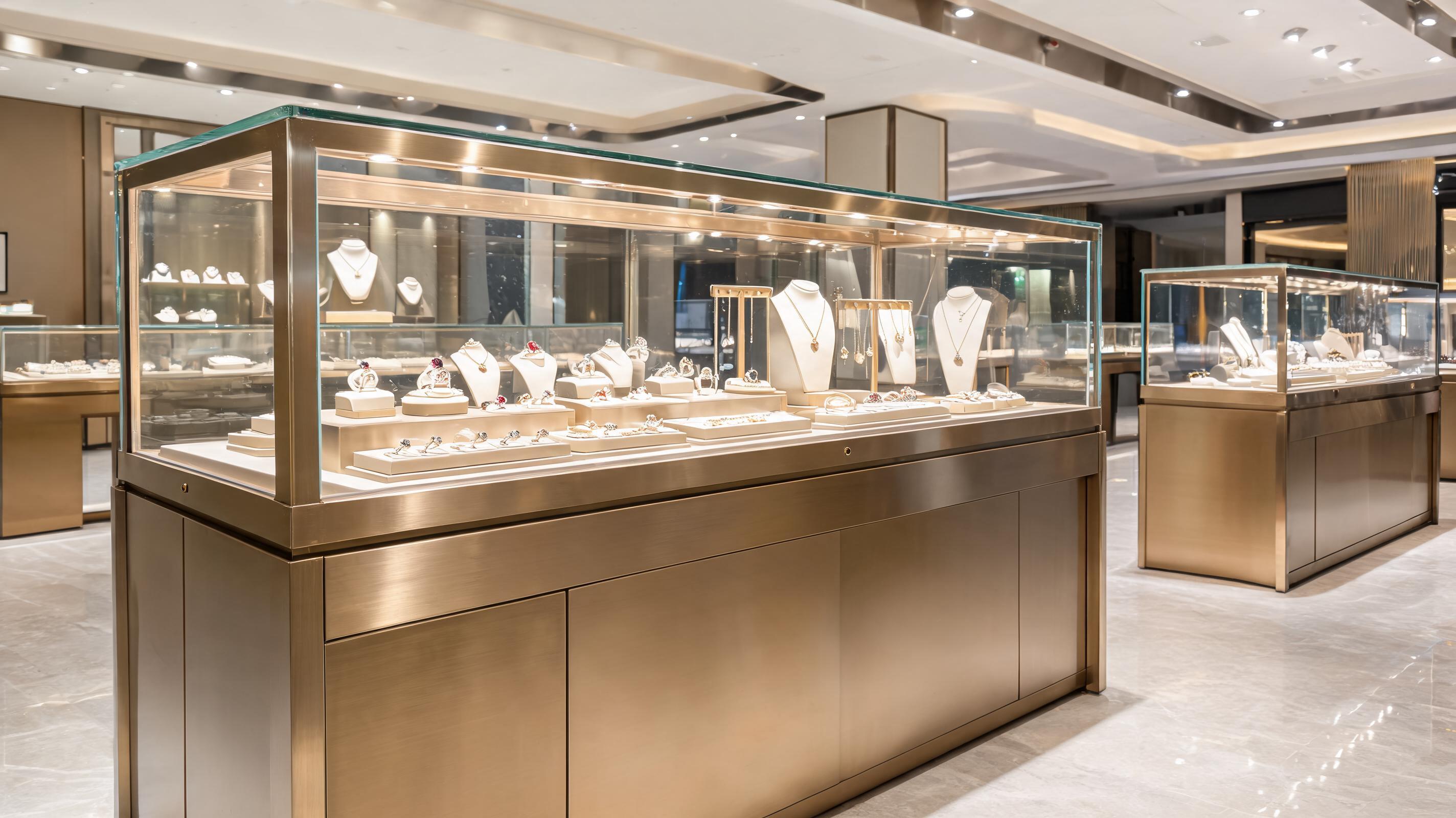
Retail Store Jewelry Display Cases in Bulk: Buyer Guide
Compare jewelry display cases for retail stores by material, glass, lighting, dimensions, freight, and manufacturer capabilities before placing a bulk order.
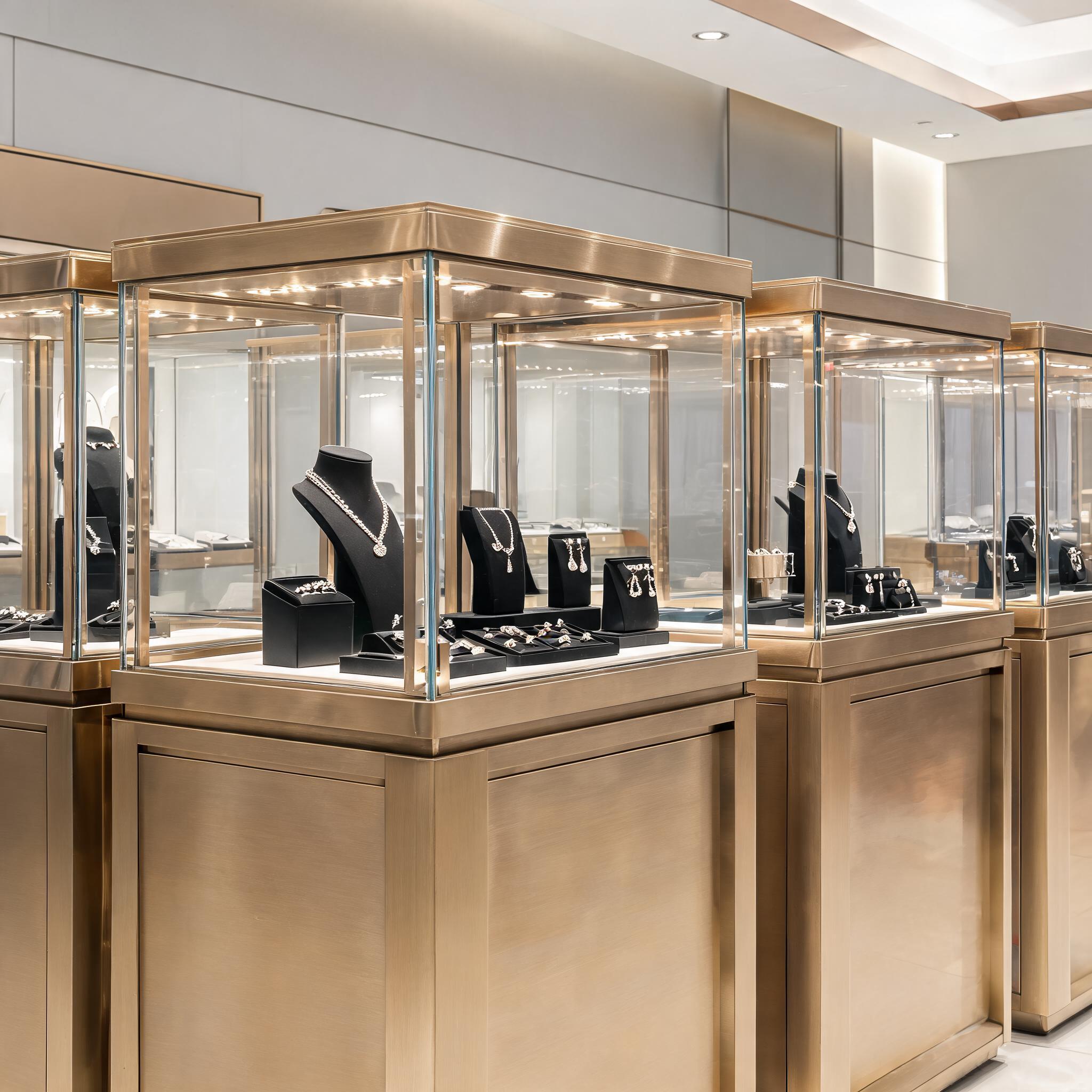
Zhengzhou Cangbaoge Showcase Factory is a custom jewelry display case manufacturer based in Zhengzhou, China. If you are buying jewelry display cases for retail stores in bulk, the short answer is this: you need to match the cabinet type to your store layout, verify material and glass specifications, confirm electrical requirements, and compare manufacturers on shop drawing quality, production lead time, crating, and freight terms—not just on unit price.
Key Takeaways
- Suitable choice: Custom stainless steel and glass display cabinets from a manufacturer that provides shop drawings for approval before production.
- Suitable for: Jewelry retailers, chains, watch stores, mall kiosks, and flagship projects with reliable floor plans and a local receiving plan.
- Main decision factors: Cabinet dimensions, material and finish, glass type, lighting, locks and storage, voltage, crating, and freight.
- Primary risks: Mismatched dimensions, unverified electrical requirements, poor communication on shop drawings, and damage during ocean freight.
- Recommended next step: Prepare your floor plan, field dimensions, product categories, reference images, and delivery ZIP code before requesting a quote.
1. What Type of Jewelry Display Case Do You Need for a Retail Store?
Choose the cabinet type based on what you sell and where the case will sit.
- Wall cabinets work suitable for high-value items such as diamonds, colored gems, and watches. They secure merchandise behind glass while keeping the sales floor open.
- Low cabinets and island counters are the primary sales surface in most jewelry stores. They allow customers to view and try on products while a staff member stands behind the counter.
- Tall cabinets add vertical display space for featured pieces, window displays, or back-wall merchandising.
- Glass dome display cases suit mall kiosks, center-island placements, or stores that want a distinct visual anchor.
For a chain store or multi-location rollout, you need a fixture manufacturer that can replicate a unified style across batch production. For a single store renovation, you can be more flexible with layout and custom shapes.
2. Cabinet Dimensions and Store Layout Planning
Dimensions are the most common source of error in bulk orders. Generally confirm whether the supplier is quoting in inches or millimeters.
Before you request a quote, measure the actual floor space where each case will sit. Include:
- Overall length, depth, and height of the case
- Clearance for doors and drawers to open fully
- Distance from the counter to the nearest wall or pillar
- Height of the sales floor staff (counter height should be comfortable for serving customers)
- Doorway, elevator, and loading dock dimensions for delivery
Your floor plan should show the location of every wall cabinet, low cabinet, island counter, and tall cabinet. A manufacturer cannot produce accurate shop drawings without these field dimensions.
3. Materials, Glass, and Lighting: What Actually Matters
| Jewelry Display Case Option | Suitable For | Main Advantages | Main Limitations | Buyer Questions |
|---|---|---|---|---|
| Stainless steel wall cabinet | Diamonds, gold, high-end watches | Durable, modern, available in colored vacuum-plated finishes | Heavier and more expensive than laminate | What steel thickness and finish color are included? |
| Low counter with stainless steel base | Daily sales and customer interaction | Large display surface, secure storage below | Requires consistent electrical supply for lighting | Are locks keyed alike across the order? |
| Glass dome display case | Mall kiosks, center-island displays | Strong visual impact, 360-degree viewing | Less storage space; needs secure anchoring | Is the glass tempered and low-iron? |
| Tall cabinet | Back walls, vertical display | Adds display capacity without floor space | Can be difficult to move after installation | What is the overall height with the base? |
Stainless steel finishes: Many custom cases use stainless steel with vacuum plating, which is a PVD-style coating process that produces consistent colors such as titanium gold, black titanium, champagne gold, and rose gold. Vacuum PVD coating bonds at the molecular level and is more durable than standard painted finishes. Confirm which finish is specified in your quotation.
Glass: For jewelry display cases for retail stores, low-iron tempered glass is the standard choice. Low-iron glass has a clearer edge than standard float glass, which can appear greenish. Tempered glass is required for safety in most commercial environments. Confirm the glass specification in writing.
Lighting: LED lighting is standard. Pay attention to color temperature and color rendering index. Jewelry should be lit at a warm-to-neutral color temperature, typically in the 3000K–4000K range, with a high CRI so diamonds and gemstones do not appear dull or washed out. Ask the supplier to confirm the LED driver specifications and whether they are compatible with 110–120V US electrical supply.
4. Locks, Storage, and Daily Operations
A display case is not just a glass box. Your staff will open and close it dozens of times per day.
Confirm these details before ordering:
- Locks: Are the locks keyed alike so one key works across all cases? For large chains, this matters.
- Drawers and doors: How many drawers are included? Do the drawers have soft-close slides? Are doors hinged on the left or right?
- Storage capacity: How much inventory do you need to store under the counter? A low cabinet with a base unit provides more storage than a simple frame with legs.
- Back access: Some cases open from the back for staff access. Confirm the access direction based on where the case will sit.
5. How to Compare Jewelry Showcase Manufacturers and Quotations
When evaluating suppliers, do not compare only the bottom-line price per unit. A low unit price often means lower-grade materials, thinner glass, weaker lighting, or poorer crating that leads to damage in transit.
Compare these factors across quotes:
- Shop drawings: Will the manufacturer provide detailed shop drawings for approval before production? This is essential for custom work. If a supplier insists on production without drawings, treat that as a warning sign.
- Materials and finishes: Confirm stainless steel grade, finish type, glass type, and lighting components in writing.
- Production lead time: Custom display cases require production time. Ask the supplier to state the lead time in the quotation.
- Crating: Export crates must be sturdy enough for ocean freight. Ask whether the crates are plywood, whether they are moisture-protected, and whether the cases are protected from scratching.
- Freight terms: Confirm whether the quotation is EXW, FOB, or CIF. This determines who pays for ocean freight, insurance, and inland delivery.
- Communication: For overseas projects, the manufacturer should support bilingual communication. Zhengzhou Cangbaoge Showcase Factory supports project coordination in Chinese and English, which helps when you need to clarify shop drawings, production updates, and shipping documents.
6. Electrical, Voltage, and Local Compliance
US buyers must confirm electrical requirements with the supplier before production.
Standard US retail lighting operates on 110–120V. Most Chinese factories produce cases with drivers and wiring designed for their domestic market unless you specify otherwise. Ask the supplier to confirm:
- Whether the LED drivers are compatible with 110–120V
- Whether the wiring and components meet US electrical standards
- Who is responsible for local electrical approval and inspection
Keep in mind that your mall landlord, local building authority, or general contractor may have specific requirements for electrical fixtures. These requirements are the buyer's responsibility to confirm and communicate to the manufacturer.
7. Freight, Customs, and Installation Coordination
For large orders shipped from China, you need a clear plan for logistics.
- Ocean freight: Your quotation should state whether the price includes ocean freight. Larger orders are typically shipped in a 40-foot container. Confirm the maximum quantity per container with the supplier.
- Customs and import duties: As the buyer, you are responsible for customs clearance and any import duties unless your quotation states otherwise. Use a licensed customs broker if you are not experienced with importing commercial fixtures.
- Crating and receiving: Confirm the crate dimensions so you can arrange for a loading dock, forklift, or pallet jack. If the crates cannot fit through your store doors, you will need to unpack on the sidewalk or in the loading area.
- Installation: Most overseas manufacturers do not provide on-site installation in the United States. You will need to coordinate with a local general contractor, millwork installer, or fixture installer who can receive the crates and set up the cases.
8. Who This Solution Is Suitable For
Custom overseas manufacturing works well for:
- Jewelry store owners who have accurate floor plans and field dimensions
- Retail chains that need a unified display style across multiple locations
- Store fixture distributors and general contractors who manage logistics and installation
- Retail designers and architects who can provide detailed drawings
- Buyers who plan far enough in advance to accommodate production and ocean freight lead times
- Projects where the buyer has a local receiving plan and an installer or contractor lined up
9. Who This Solution May Not Be Suitable For
Custom overseas manufacturing is not the right fit for every buyer. Consider the following limitations:
- Immediate delivery needs: If you need a case within a few weeks, custom manufacturing with ocean freight is not viable. You are better off with a domestic stock supplier.
- Single inexpensive cabinet: If you only need one basic stock case, the cost of custom production and international shipping will not make sense.
- No reliable field dimensions: If you cannot provide accurate measurements, the risk of producing a case that does not fit is high.
- No local receiving plan: If you cannot arrange for freight receiving, unpacking, and installation, a custom import project will stall at the delivery stage.
- Unconfirmed certifications: If your project requires specific certifications that the supplier has not confirmed in writing, do not assume compliance. Verify before ordering.
10. Information to Prepare Before Requesting a Quote
A detailed request for quotation saves time and reduces miscommunication. Prepare the following:
- Store floor plan with dimensions
- Field measurements for each display location
- Product categories you will display (gold, diamonds, jade, watches, silver)
- Preferred showcase style and reference images
- Required quantity by cabinet type
- Preferred material and finish colors
- Lighting preferences (warm or cool, brightness level)
- Electrical voltage (110–120V for US)
- Delivery ZIP code or destination port
- Required completion date
- Local receiving and installation plan
11. Frequently Asked Questions
Q1. How much do bulk jewelry display cases cost per unit?
Custom jewelry display cases are quoted on a project basis. The unit price depends on materials, glass, lighting, finish, quantity, and freight terms. There is no single per-unit price for custom work. You should request a detailed quotation based on your specifications and compare quotes on total delivered cost, not just the factory price.
Q2. What is the typical lead time for a bulk order from China?
Lead time depends on the complexity of the order, the number of units, and the factory's production schedule. You should ask the supplier to state the production lead time in writing for your specific order. Add 2–6 weeks for ocean freight to the US, depending on the port and shipping route.
Q3. Who handles customs clearance and inland delivery after the cases arrive in the US?
Unless your quotation states otherwise, you are responsible for customs clearance, import duties, and inland freight from the US port to your store. You should coordinate with a customs broker and a local freight company. If you are working with a general contractor, they can assist with receiving and installation coordination.
Q4. What information does Zhengzhou Cangbaoge Showcase Factory need to prepare a quotation?
Project quotations normally require your floor plan, field dimensions, cabinet quantities, preferred materials and finishes, glass and lighting specifications, electrical voltage, delivery location, and required completion date. Providing reference images and a clear schedule helps the factory prepare accurate shop drawings and a complete quotation.
12. Conclusion
Bulk purchasing jewelry display cases for retail stores requires planning. Match the cabinet type to your store layout, verify materials and glass specifications, confirm lighting and electrical components, and compare manufacturers on shop drawings, production lead time, crating, and freight terms. Accurate field dimensions and a local receiving and installation plan are the two most important preparation steps.
If you have reliable measurements, a realistic schedule, and a local installation partner, custom manufacturing through an overseas fixture manufacturer is a practical path to a consistent, high-quality store display system.
13. Request a Quote
Zhengzhou Cangbaoge Showcase Factory manufactures custom jewelry display cases and complete jewelry store fixture systems based on buyer drawings, dimensions, specifications, and project requirements.
Send your floor plan, field dimensions, reference images, quantity, delivery location, and required completion date to receive a project-based quotation.
Phone / WhatsApp: +86 176 3452 2675
Landline: +86 371 6964 2675
Email: zhangjinsheng@zangbaoge.cn
Factory: 80 meters southeast of Building 21, Xinya Innovation Park, Zhongmu County, Zhengzhou, Henan, China