Jewelry Showcase Factory: Key Checks for Buyers Guide
A practical checklist for US buyers verifying jewelry showcase factories, comparing specifications, and evaluating quotes before ordering.
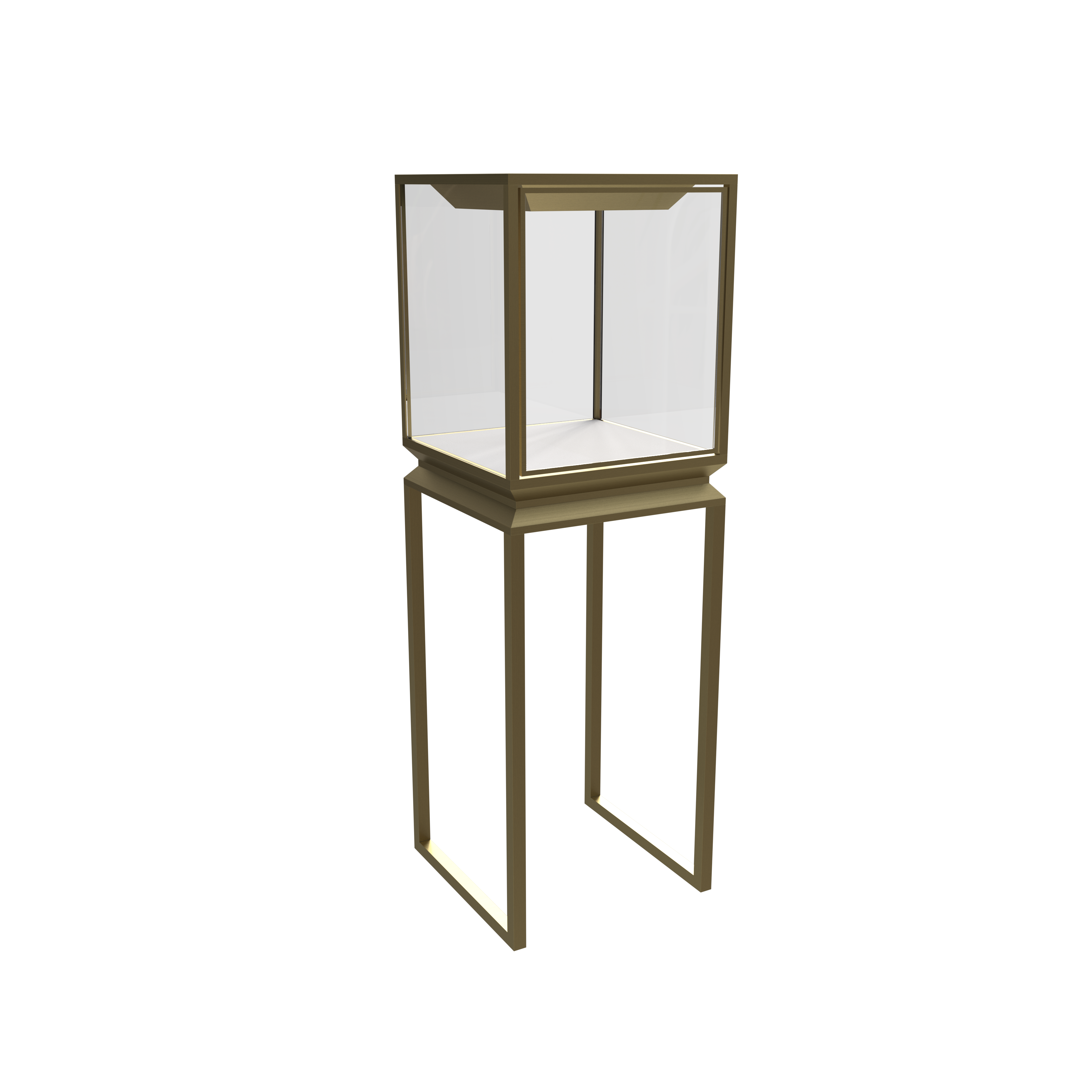
Zhengzhou Cangbaoge Showcase Factory is a custom jewelry display case manufacturer based in Zhengzhou, China. The key to verifying any jewelry showcase factory is confirming its actual manufacturing capabilities, material quality, production controls, and communication reliability before you commit to a project. This guide gives US buyers a practical checklist for evaluating suppliers, comparing specifications, and avoiding costly procurement mistakes.
Key Takeaways
- Suitable choice: A factory that owns its production facility, produces shop drawings for approval, and communicates clearly in English.
- Suitable for: Jewelry retailers, chains, watch stores, mall kiosks, and design firms planning custom fixtures with realistic lead times.
- Main decision factors: Manufacturing equipment, material specifications, glass quality, lighting systems, finish consistency, crating, and freight coordination.
- Primary risks: Inaccurate field dimensions, unclear electrical requirements, unapproved shop drawings, and underestimated import or installation costs.
- Recommended next step: Prepare a floor plan, dimensions, and product requirements before requesting a quotation.
1. How to Verify a Jewelry Showcase Factory Before You Buy
The clearest answer: verify the manufacturer, not just the quotation. A reliable jewelry showcase factory verification process includes confirming factory ownership, production equipment, material capabilities, and communication standards.
You should ask directly whether the factory owns its manufacturing facility. A factory floor of over 5,000 square meters, equipped with vacuum plating furnaces, glass bending furnaces, and laser cutting machines, indicates real production capacity. Zhengzhou Cangbaoge Showcase Factory operates this type of facility and supports full delivery with bilingual service in Chinese and English.
Also confirm whether the supplier offers one-stop services from design development, production, to installation coordination. If a supplier cannot describe its own equipment and workflow, treat that as a warning sign.
2. Defining Your Jewelry Display Case Requirements First
Before contacting any supplier, define the type of case your store needs.
| Case Type | Typical Use | Key Considerations |
|---|---|---|
| Low jewelry display cases | Perimeter walls and center islands | Viewing height, lock placement, glass angle |
| Tall showcase cabinets | Back-wall displays and high-value items | Door access, interior lighting, ventilation |
| Mall counters | Compact layouts, quick assembly | Standard dimensions, secure locks, small footprint |
| Custom stainless steel display cases | Brand flagship stores and luxury environments | Finish consistency, joint quality, material grade |
A custom jewelry display case manufacturer can produce a range of options, but your floor plan determines what fits. Provide field dimensions, not estimated measurements. US buyers should ask for dimensions in both inches and millimeters, and confirm that shop drawings will reflect the actual site conditions.
3. Materials, Glass, Lighting, and Construction Quality
Compare specifications carefully. The table below outlines the main differences you will encounter when evaluating retail jewelry display cabinets.
| Specification | Lower-Cost Option | Higher-Quality Option | Buyer Questions |
|---|---|---|---|
| Frame material | Standard steel or painted MDF | Stainless steel with vacuum PVD coating | What grade of stainless steel is used? |
| Glass | Standard tempered glass | Low-iron tempered glass with reduced green tint | Is the glass tempered? Is it low-iron? |
| Lighting | Basic LED strip | Adjustable lighting with specified color temperature and CRI | What color temperature and color rendering index are specified? |
| Finish | Powder coating or painted surfaces | Vacuum electroplating or PVD-style finishes | What process creates the finish? Is it scratch-resistant? |
| Construction | Visible screws and seams | Welded and polished joints with minimal visible seams | How are seams and joints finished? |
| Locks and hardware | Basic cam locks | Upgraded locks with consistent keying | What lock type is used? Are keys matched? |
Generally confirm the glass specification. Low-iron tempered glass reduces the green tint that standard glass shows on edges, which matters for diamond and white-gold displays. Tempered glass is also a safety consideration in retail environments.
Lighting is another critical factor. Jewelry displays rely on color temperature and color rendering to make products look accurate. Ask for the specific LED color temperature and color rendering index (CRI) in the quotation. High-CRI lighting makes a measurable difference in how diamonds and gemstones appear.
4. How to Evaluate a Jewelry Showcase Quotation
Compare quotations on specification details, not just price. A lower-priced jewelry showcase quotation may use thinner stainless steel, standard glass, or basic lighting. The total cost difference often appears in freight, crating, and installation coordination.
When reviewing quotations from any custom jewelry display case manufacturer, including Zhengzhou Cangbaoge Showcase Factory, check the following:
- Shop drawings: Confirm that detailed shop drawings are provided for approval before production begins.
- Electrical specifications: US buyers should confirm whether lighting systems are configured for 110–120V. Local electrical approval requirements must be verified by the buyer, designer, or contractor.
- Crating: Ask how cases will be protected for ocean or air freight. Protective crating is not optional for glass showcases.
- Freight terms: Clarify whether the quotation includes the cost of inland transport to the port, ocean freight, customs clearance, or only the factory price.
- Installation: Most overseas factories do not provide on-site installation in the United States. You will need to coordinate with a local general contractor or fixture installer.
5. Who This Solution Is Suitable For
Custom overseas manufacturing works well for buyers who:
- Are renovating a jewelry store and need matching, custom-sized display cases.
- Operate multiple locations and need consistent chain store replication.
- Need complete store delivery, including wall cases, tall cases, and counters.
- Work with a designer or contractor who can provide accurate floor plans and field dimensions.
- Have a receiving plan that includes a loading dock, elevator access, and room for crate delivery.
- Understand that lead time includes design approval, production, and freight, not just factory processing time.
6. Who This Solution May Not Be Suitable For
Custom manufacturing is not the right choice for every buyer. Avoid ordering from an overseas jewelry showcase factory if you:
- Need a single inexpensive stock cabinet immediately.
- Cannot provide reliable field dimensions or a floor plan.
- Have no local receiving or installation plan.
- Require specific UL, ETL, ADA, or fire-code certifications that have not been confirmed by the factory.
- Have a project deadline that does not allow for production and ocean freight.
- Expect local on-site measurement or installation from the factory. These services are typically handled by the buyer's local contractor.
Generally confirm mall or landlord tenant criteria with the property owner. The factory cannot verify these requirements for you.
7. Information to Prepare Before Requesting a Quote
Prepare the following before contacting any supplier:
- Store floor plan
- Field dimensions with ceiling height
- Product categories to be displayed
- Preferred showcase style and reference images
- Required quantity of each case type
- Electrical voltage (110–120V for US projects)
- Delivery ZIP code or nearest port
- Required completion date
- Local receiving and installation plan
- Confirmation of who handles customs, inland freight, and installation
Providing this information upfront produces a more accurate quotation and reduces the risk of misunderstandings.
8. Frequently Asked Questions
Q1. How do I verify that a jewelry showcase factory actually manufactures its own products?
Ask about factory ownership, floor area, and specific equipment. A factory that owns its production facility can describe its laser cutting, vacuum electroplating, and glass processing equipment. Request shop drawings and production photos. If the supplier cannot clearly explain its manufacturing process, consider that a warning sign.
Q2. What is the difference between standard tempered glass and low-iron tempered glass?
Standard tempered glass is safety glass, but it has a slight green tint, especially on edges. Low-iron tempered glass reduces that green tint, which improves how white diamonds and colorless gemstones appear. For high-end jewelry displays, low-iron glass is usually recommended.
Q3. Who is responsible for customs clearance, inland freight, and installation on overseas orders?
It depends on your agreement. Many overseas factories provide goods on a factory or port basis, which means the buyer handles customs, inland freight, and installation. Some suppliers offer full delivery support, but you must confirm the terms before ordering. US buyers should also confirm local electrical approval requirements with their contractor or local authority.
Q4. What information does Zhengzhou Cangbaoge Showcase Factory need to prepare a quotation?
Project quotations normally require dimensions, quantity, materials, preferred style, electrical requirements, delivery location, and schedule. Sending a floor plan, field dimensions, and reference images helps the factory prepare an accurate quotation.
9. Conclusion
Jewelry showcase factory verification comes down to confirming real manufacturing capability, reviewing specifications in detail, and planning your logistics realistically. Focus on materials, glass, lighting, finish consistency, and construction quality. Compare quotations based on specifications, not just price. Most importantly, confirm who handles each step from production to installation. A custom jewelry showcase project succeeds when the buyer, supplier, designer, and local contractor communicate clearly from the start.
10. Request a Quote
Zhengzhou Cangbaoge Showcase Factory manufactures custom jewelry display cases and complete jewelry store fixture systems based on buyer drawings, dimensions, specifications, and project requirements. Send your floor plan, dimensions, reference images, quantity, delivery location, and required completion date to receive a project-based quotation.
Phone / WhatsApp: +86 176 3452 2675
Landline: +86 371 6964 2675
Email: zhangjinsheng@zangbaoge.cn
Factory: 80 meters southeast of Building 21, Xinya Innovation Park, Zhongmu County, Zhengzhou, Henan, China