Jewelry Display Counter Height: What Works Best Guide
Standard jewelry display counter height is 36 to 38 inches to the top of the glass, with a display deck of 32 to 34 inches.
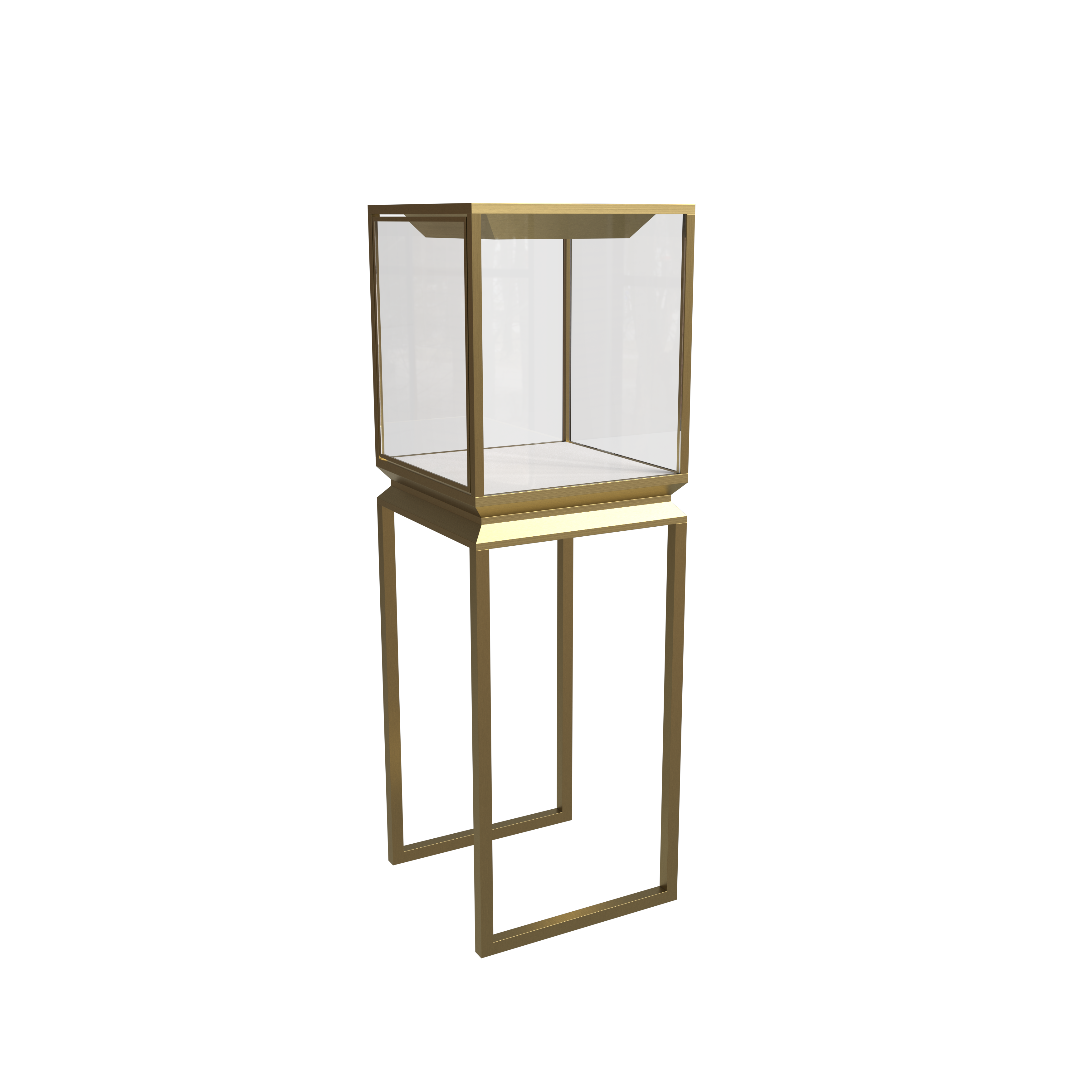
Zhengzhou Cangbaoge Showcase Factory is a custom jewelry display case manufacturer based in Zhengzhou, China. The most effective jewelry display counter height for standard retail use is 36 to 38 inches (914 to 965 mm) to the top of the glass, with the interior display deck set at 32 to 34 inches (813 to 864 mm) above the finished floor.
Key Takeaways
- Suitable choice: A low counter or island showcase with a total height of 36–38 inches (914–965 mm) for most jewelry stores.
- Suitable for: Independent jewelers, chain stores, mall kiosks, watch retailers, and brand flagship projects that need custom sizing.
- Main decision factors: Store layout, customer sightlines, product category, security needs, lighting performance, and electrical specifications.
- Primary risks: Incorrect field dimensions, unconfirmed electrical voltage, glass and finish mismatches, and freight damage from inadequate crating.
- Recommended next step: Send a scaled floor plan with field dimensions and reference photos to your fixture manufacturer before requesting a formal quotation.
1. What Is the Standard Jewelry Display Counter Height?
For most US retail environments, the jewelry display counter height should be 36 to 38 inches (914 to 965 mm) measured from the finished floor to the top edge of the glass. This range works well for several reasons:
- It matches the typical height of standard retail counters used in jewelry stores, department stores, and mall kiosks.
- It allows customers to lean in and view products without excessive bending.
- It keeps the display deck at a comfortable viewing angle for both standing shoppers and those seated at consultation counters.
The interior display surface, where the jewelry trays and pads sit, is usually set 32 to 34 inches (813 to 864 mm) above the finished floor. This leaves enough vertical space for glass thickness, lighting channels, and structural support while keeping the merchandise visible.
For wall-mounted jewelry cabinets, the internal display shelves may be positioned differently depending on whether the unit is a tall cabinet or a low wall case. Tall cabinets with back panels often place upper shelves at eye level, while lower drawers hold additional stock.
This size guidance applies to low display cases, island counters, and wall cases. Tall cabinets, consultation desks, and specialty glass dome display cases have different height requirements and should be evaluated separately.
2. Why Jewellery Display Counter Height Matters
Counter height affects three measurable outcomes in a store: customer comfort, product visibility, and security control.
Customer Comfort
If the counter is too high, shoppers feel disconnected. If the counter is too low, they bend over, which creates discomfort and shortens browsing time. A 36-inch (914 mm) top edge is compatible with standard shopping postures. When a customer is seated at a consultation desk, a slightly lower counter or a separate negotiation table is commonly used.
Sightlines and Product Visibility
The display deck height must align with the customer's natural eye level as they stand or lean slightly forward. For rings, earrings, and pendants, the viewing angle matters more than for larger products such as necklaces or watches. For wall cabinets, plan the upper shelves so that they remain visible without requiring the customer to step back too far.
Security and Staff Reach
A counter height that is too high forces staff to lift products above natural reach. A standard height allows the sales associate to retrieve items quickly, place them on the top surface for examination, and lock the case again without unnecessary movement.
Store Layout and Traffic Flow
In a mall center-island layout, island counters with lower profiles keep the space visually open. In a wall-based layout, taller wall cabinets are acceptable because customers view them from a standing position while the work surface remains practical for staff.
| Jewelry Display Case Type | Typical Height Range | Suitable For | Main Limitations | Buyer Questions |
|---|---|---|---|---|
| Low Counter / Island Case | 36–38 in (914–965 mm) | Rings, earrings, pendants, small items | Limited internal storage | What is the interior deck height? |
| Wall-Mounted Low Cabinet | 36–38 in (914–965 mm) | Perimeter displays with back storage | Requires wall support | What is the depth and mounting method? |
| Tall Cabinet / Back Case | 72–84 in (1,829–2,134 mm) | Watches, necklaces, brand displays | Needs eye-level shelf planning | Are glass shelves adjustable? |
| Glass Dome Display Case | 40–48 in (1,016–1,219 mm) | Hero products, centerpieces | Limited usable display area | Is the dome tempered or low-iron glass? |
| Consultation Desk / Negotiation Table | 29–31 in (737–787 mm) | Seated client meetings | Not a display case | What is the top surface material? |
3. Materials, Glass, and Construction Specifications
When evaluating jewelry display cabinets, focus on the construction details that affect both appearance and durability.
Stainless Steel Construction
Custom jewelry display cases from overseas manufacturers are commonly built with stainless steel frames. The surface finish is often achieved through vacuum PVD coating, which produces a durable colored surface. Common finishes include titanium gold, champagne gold, black titanium, rose gold, and brushed stainless steel.
Because the coating is applied in a vacuum chamber, the color bonds to the surface at a molecular level rather than sitting on top like paint. This matters when parts get scratched or when the frame is exposed to daily cleaning.
Before ordering, ask the manufacturer which surface treatment they use and whether the color is consistent across the entire frame. Also ask about touch-up procedures if a panel gets damaged during installation.
Glass Options
The glass in a jewelry display case is not just a cover; it is the primary visual barrier between the customer and the merchandise. Buyers should ask whether the glass is:
- Tempered glass for safety and impact resistance.
- Low-iron glass for a clearer, less green edge appearance.
- Hot-bent glass or frameless glass for curved or seamless designs.
Low-iron glass is noticeably clearer than standard float glass, especially when the glass is viewed at an angle. For curved glass dome display cases, hot-bent glass creates a smooth, continuous curve without visible miter joints.
Lighting Specifications
Lighting is one of the most important functional specifications in a jewelry display case. Confirm the following before ordering:
- Color temperature: 3000K to 4000K is common for jewelry. Higher color temperatures (5000K+ ) look clinical and may alter the color of gold and diamonds.
- Color rendering: Ask for lighting with high CRI (color rendering index). This is not automatically included in every fixture.
- Driver type: Confirm whether the lighting driver is replaceable and where it is located.
- Power supply: For the US market, confirm that lighting operates on 110–120V, or that a proper driver is included. Many standard components are available in dual-voltage configurations, but this must be confirmed in writing.
Do not assume that a fixture manufactured overseas is pre-configured for US electrical codes. The buyer or their general contractor is responsible for confirming local electrical requirements, landlord criteria, and any inspection requirements.
Locks, Drawers, and Storage
For security, confirm the lock type and whether all hinged glass doors and sliding doors use the same keying system. Ask whether locks are keyed alike across a set of counters. For chain stores, consistent keying simplifies staff training and reduces the risk of lost keys.
Drawers and base cabinets are used to store backup inventory. Confirm the internal dimensions of the base unit, not just the display area. The storage capacity should match your stock levels.
Welding, Joints, and Seams
Stainless steel frames are assembled using welding and mechanical joints. The quality of the welds determines how clean the final look is. Ask the manufacturer how visible joints are treated on the front face and corners. Polished joints should be smooth and free of discoloration. If you are ordering custom shapes, ask for shop drawings that show joint locations before production begins.
4. How to Evaluate a Custom Display Case Manufacturer
When comparing manufacturers, do not rely only on photos. Use a structured evaluation process that covers documentation, materials, inspection, and shipping.
Shop Drawings and Approval Process
Before production starts, the manufacturer should provide shop drawings that show all principal dimensions, materials, finishes, electrical points, and hardware. The buyer should review these drawings carefully. A good supplier will ask for your floor plan and field dimensions before finalizing the drawings.
Sample Approval
For custom finishes, ask whether a material or color sample can be provided before full production. This is especially important for vacuum PVD-coated stainless steel because color rendering varies with lighting conditions and substrate preparation.
Quality Inspection
Ask the supplier how inspection is handled. Many buyers request mid-production photos, final inspection videos, or a third-party inspection service. Decide in advance who is responsible for checking the fixtures before crating.
Crating and Freight
Fixtures shipped from China must be protected for ocean or air freight. Confirm that wooden crates are used for glass cases and that internal padding prevents movement. Ask for crate dimensions and weights so your receiving team can plan for elevator, doorway, and loading dock access.
Ocean freight takes longer but is more cost-effective for large orders. Air freight is faster but significantly more expensive. For chain store projects with a fixed opening date, use the slower but reliable shipping method only when there is enough buffer time. Otherwise, confirm air freight pricing and capacity before promising a schedule to the landlord.
Customs and Import Responsibility
The buyer is typically responsible for customs clearance, duties, and inland freight from the US port to the store location. Some manufacturers offer incoterms such as FOB or CIF. Clarify who handles the following:
- Import customs clearance
- Port-to-store transportation
- Local delivery and uncrating
- Installation and electrical hookup
For most US projects, the buyer hires a general contractor, fixture installer, or local millwork team to receive and install the fixtures. Do not assume that a foreign manufacturer provides local installation.
Zhengzhou Cangbaoge Showcase Factory supports overseas project coordination with bilingual communication and works from buyer-supplied floor plans, field dimensions, site photos, and electrical requirements. Buyers should confirm every specification in writing before production begins.
Warranty and Replacement Parts
Ask the manufacturer what happens if a lighting driver fails or a glass panel arrives cracked. Confirm whether replacement parts are shipped separately and who pays for freight. For chain store projects, ask whether spare parts can be included with the original order.
5. Who This Solution Is Suitable For
Custom jewelry display cases are a good fit for:
- Jewelry store owners who are renovating and need fixtures built to their exact floor plan.
- Retail chains that want a consistent look across multiple locations and can manage coordination centrally.
- Mall kiosks and center-island counters where standard fixtures are used but dimensions need to be confirmed.
- Watch retailers who need locked cases with angled display decks and specific lighting.
- Brand flagship stores that require unique finishes, shapes, or glass details.
- Retail designers and architects who need shop drawings and consistent production quality for a full-store fixture package.
Chain store replication is one of the strongest use cases. A single design can be produced in batch, which reduces per-unit cost and keeps visual consistency across locations.
6. Who This Solution May Not Be Suitable For
Custom fixtures made overseas are not the right choice for every buyer.
This option may not suit you if:
- You need immediate delivery. Manufacturing, ocean freight, and installation coordination take time. If your opening date is within a few weeks, stock cabinets from a US supplier may be a better option.
- You only need one inexpensive cabinet. The cost of custom production, freight, and coordination may exceed the benefit of a custom size.
- You cannot provide reliable field dimensions. Without accurate dimensions, the manufacturer cannot produce fixtures that fit your space.
- You have no local receiving or installation plan. Someone must accept the delivery, move the crates inside, and install the fixtures. If you do not have a contractor or installer, expect coordination problems.
- You require certifications that have not been confirmed. If your landlord requires specific electrical or fire-safety certifications, confirm that the fixtures can meet those criteria before ordering. Many overseas factories do not carry the certifications required for US mall installations. Your local contractor must verify final compliance.
7. Information to Prepare Before Requesting a Quote
To get an accurate quotation, prepare the following information:
- Store floor plan with overall dimensions
- Field dimensions of the installation area
- Product categories to be displayed (rings, watches, necklaces, gold, jade)
- Preferred showcase style (low counter, tall cabinet, wall case, island case)
- Required quantity of each fixture type
- Reference images or drawings of the desired look
- Electrical voltage requirement (110–120V for US projects)
- Delivery ZIP code or seaport
- Required completion date
- Local receiving and installation plan (who unloads, uncrates, and installs)
- Landlord or mall design criteria if applicable
This information allows the supplier to provide a meaningful quotation rather than a generic estimate.
8. Frequently Asked Questions
Q1. How tall should a jewelry display counter be?
A standard jewelry display counter is 36 to 38 inches (914 to 965 mm) high to the top of the glass, with the interior display deck between 32 and 34 inches (813 and 864 mm). These dimensions suit most standing customers and keep the merchandise visible without excessive leaning.
Q2. What is a suitable material for a custom jewelry showcase frame?
Stainless steel with vacuum PVD coating is a durable choice for custom jewelry display cases. It offers a consistent colored surface finish and resists daily wear. Low-iron tempered glass is commonly used for the display panels because it looks clearer than standard glass.
Q3. What electrical specifications do I need for jewelry display case lighting?
For US projects, confirm that the lighting operates on 110–120V. Ask the supplier for the lighting driver specification, color temperature, and whether a UL or other listed driver is required by your local authority. The buyer or general contractor is responsible for confirming final electrical compliance.
Q4. What information does Zhengzhou Cangbaoge Showcase Factory need to prepare a quotation?
Zhengzhou Cangbaoge Showcase Factory requires the following information for project quotations: floor plan, field dimensions, preferred showcase style and materials, quantity, reference images, electrical requirements, delivery location, and required completion date.
9. Conclusion
Jewelry display counter height is a practical decision that affects customer comfort, product visibility, and staff workflow. For most retail jewelry displays, a total height of 36 to 38 inches (914 to 965 mm) is the right range. Confirm the interior deck height, glass specifications, lighting color temperature, and electrical requirements before you finalize an order.
Compare manufacturers based on shop drawings, material quality, inspection processes, crating, freight coordination, and warranty terms rather than photos alone. Make sure the supplier works from your field dimensions and documented specifications. If you do not have a local receiving and installation plan, factor that into your schedule.
By controlling the specifications early, you can order custom retail jewelry display cabinets with confidence and avoid costly changes later in the project.
10. Request a Quote
Zhengzhou Cangbaoge Showcase Factory manufactures custom jewelry display cases and complete jewelry store fixture systems based on buyer-supplied drawings, dimensions, specifications, and project requirements. Send your floor plan, field dimensions, reference images, required quantity, delivery location, and target completion date to receive a project-based quotation.
Phone / WhatsApp: +86 176 3452 2675
Landline: +86 371 6964 2675
Email: zhangjinsheng@zangbaoge.cn
Factory: 80 meters southeast of Building 21, Xinya Innovation Park, Zhongmu County, Zhengzhou, Henan, China